Showing posts with label Big Data. Show all posts

Tuesday, May 26, 2015

Why Skills Matter More than Ever in Our Data-Driven Economy


Published on May 19th, 2015 | by Daniel Castro Center for Data Innovation

This article originally appeared in Government Technology.
We live in an era of digital abundance. Two technology trends—cloud computing and big data—are transforming how we live and work. The rise of the cloud has reduced computing costs to historic lows, while the emergence of big data has created a world awash in useful information.

These changes are disrupting numerous sectors where businesses used to create competitive advantages for themselves based on access to superior IT or exclusive data. With these advantages slipping away, one of the primary differentiators for organizations in data-intensive sectors will be access to talented, data-literate workers. This is particularly true for government agencies. To improve public services with data-driven technology, they’ll need to work harder than ever to recruit, hire and retain highly skilled data engineers and managers.

To understand the relative importance of these skills, consider the degree to which cloud architectures have commoditized computing. While Moore’s Law—the observation that the number of transistors on a chip will double roughly every two years—predicted the modern digital era of smartphones, tablets and wearables, the recently proposed Bezos’ Law—the observation that the cost of a unit of computing power in the cloud is reduced by 50 percent every three years—predicts that the cost of computing will eventually be non-limiting for most organizations.

Cloud computing has not only reduced costs, it also has given organizations flexibility to adapt their computing infrastructure to changing needs. This has democratized access to the latest technologies, putting new entrants on the same footing as long-established incumbents. When everyone has access to a Stradivarius, talent matters.

The emergence of big data has had a similar effect. Relatively cheap and plentiful access to massive amounts of information has begun to erode the strategic advantage that organizations with a data monopoly might have counted on in the past. Some of these advantages will remain indefinitely—Netflix, for example, knows more about the viewing habits of its customers than anyone else — but competitors now can mine other data sources to narrow this gap. Therefore, organizations can no longer rely only on proprietary data to stay ahead and must instead compete on talent.

Yet while access to the most talented, data-literate workers increasingly defines which organizations win in the data economy, there are too few qualified people in the labor market. McKinsey Global Institute has estimated a shortfall of 140,000 to 190,000 data scientists by 2018, as well as an even greater shortage of managers with the analytical skills needed in a big data world. Employment in data-intensive industries is geographically concentrated in certain states, putting other states at a disadvantage. This challenge will be especially pronounced for government agencies, which already have a problem recruiting the best and brightest from the private sector.

There are no easy solutions. Two well-known factors affecting employment decisions—compensation and culture—require flexible budgets and organizational change, neither of which plays to government’s strengths. But government should not give up. The UK’s Government Digital Service fundamentally rebuilt the nation’s public-sector strategy for IT, proving that disruptive innovation in government is possible.

Moreover, government agencies do have an advantage in that many of the problems they’re working on—like increasing access to affordable health care, improving the quality of schools, and making cities safer and cleaner—are the types of problems that attract the sharpest minds. While they may not be able to match the pay or benefits of Silicon Valley, they offer the chance to improve the world. In particular, this may appeal to millennials who prioritize working for the betterment of society over obtaining wealth. (Sorry, Dunkin’ Donuts, cutting infant mortality is more exciting than selling more doughnuts.)

In the long term, policymakers must fix the workforce pipeline so that skills better match employer needs in the private and public sectors. But in the short term, governments will be in fierce competition with the private sector for the best data scientists. They’ll need to use all available resources to bring in the human capital that can ensure the opportunities from the data revolution don’t pass them by.

Image: flickr user TechCrunch.

Tags: big data, cloud computing, data science, government, IT, skills gap, workforce


About the Author


Daniel Castro Daniel Castro is the director of the Center for Data Innovation and vice president of the Information Technology and Innovation Foundation. Mr. Castro writes and speaks on a variety of issues related to information technology and internet policy, including data, privacy, security, intellectual property, internet governance, e-government, and accessibility for people with disabilities. His work has been quoted and cited in numerous media outlets, including The Washington Post, The Wall Street Journal, NPR, USA Today, Bloomberg News, and Businessweek. In 2013, Mr. Castro was named to FedScoop’s list of “Top 25 most influential people under 40 in government and tech.” In 2015, U.S. Secretary of Commerce Penny Pritzker appointed Mr. Castro to the Commerce Data Advisory Council. Mr. Castro previously worked as an IT analyst at the Government Accountability Office (GAO) where he audited IT security and management controls at various government agencies. He contributed to GAO reports on the state of information security at a variety of federal agencies, including the Securities and Exchange Commission (SEC) and the Federal Deposit Insurance Corporation (FDIC). In addition, Mr. Castro was a Visiting Scientist at the Software Engineering Institute (SEI) in Pittsburgh, Pennsylvania where he developed virtual training simulations to provide clients with hands-on training of the latest information security tools. He has a B.S. in Foreign Service from Georgetown University and an M.S. in Information Security Technology and Management from Carnegie Mellon University.

Friday, May 15, 2015

Cisco WASTC West Coast Academy Conference Schedule Now Available for Review


2015
WASTC West Coast Academy Pre-Conference
&
WASTC Cisco West Coast Academy Conference 


“You cannot put 10 pounds of sugar 
in a 5 pound sack”
“Quote from Dolly Parton’s Dad”

But I think we have done just that!

now available for your review J


You are going to like it!!
So much good stuff.


To register for the conference please go to www.wastc.org and follow the red balls.

Hope to see you there,
  
--
Karen Stanton
Cisco Networking Academy
ASC ITC Ohlone
WASTC Coordinator
Western Academy Support & Training Center-WASTC
www.wastc.org
661 362 5363
karen.stanton@wastc.org

MPICT

Saturday, April 25, 2015

EMC: Enroll Today in the FREE MOOC and Earn Certificate and Award


Businesses have become increasingly focused on analyzing big data to increase revenue, drive down costs, and reduce risk. However, achieving these goals requires a transformation of people, process, and technology.

· What can Big Data and Data Lakes do for you?
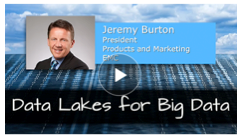
· Find out in our Free Data Lakes for Big Data MOOC.

Course Details 


Start Date: May 12, 2015 End Date: June 8, 2015 


Engage through a blend of online content including educational videos, recorded whiteboards, documents, and exercises during the four-week period.

  • Week 1: What is Big Data and Data Science? 
  • Week 2: What is the Value of Big Data and Big Data Analytics? 
  • Week 3: What is the Federation Business Data Lake? 
  • Week 4: How is the Data Lake Solution Operationalized? 

Interact with and learn from other students through small group assignments, discussion board posts, and social media activities.

Certificate and Reward 

Successfully complete the course to earn your certificate of completion.

In addition, 500 participants will receive an electronic copy of recently published textbook on Data Science and Big Data Analytics (DSA) based on cumulative highest scores achieved on the weekly assessments.

 Video

Who is it for? 

This open, online, interactive course is ideal for a diverse audience that includes:

· Decision makers
· Influencers
· Line-of-business professionals
· Business intelligence, analytics and IT professionals
· Academic faculty and students
· Anyone interested in learning about Data Science, Big Data Analytics, and Data Lake Solution

Visit EduCast.EMC.com to enroll!


Best,

Kim Yohannan, EMC Academic Alliance Manager
Kim.Yohannan@emc.com | (M) 617.462.0172

EMC2, EMC, and where information lives are registered trademarks or trademarks of EMC Corporation in the United States and other countries. All other trademarks used herein are the property of their respective owners.

© Copyright 2015 EMC Corporation. All rights reserved.
EMC Corporation, Hopkinton, MA 01748-9103

Monday, April 13, 2015

The Data Economy is a Rich Source of High-Paying Jobs

April 3, 2015 by Joshua New Masters in Data Science


Last month, the U.S. Department of Commerce published a report that found data is fueling a rapid growth in high-paying, high-skilled jobs in the public and private sector and transforming the United States’ occupational landscape. The report, titled “The Importance of Data Occupations in the U.S. Economy,” defined “data jobs” as occupations which place high importance on analyzing data, processing data (i.e. coding and auditing), and interacting with computers (i.e. writing software and performing data entry) and found that there were 10.3 million of these jobs in 2013 (about 7.8% of all employment in the US). The report acknowledges that this is a conservative estimate — if the criteria were broadened to include jobs that describe these activities as just “important,” instead of “very important,” the category would include 64 million jobs, or 59% of total employment in the United States.

What’s Driving This Job Growth?

The increased use of data in the private sector has been one of the leading drivers of job growth in the past decade. Of the 10.3 million data jobs identified in the report, 8.6 million are in the private sector. These jobs are highly paid, with an average hourly wage of $40.30 in 2013 — 68% higher than the average wage for all of industry. From 2003 to 2013, the private sector industries that are considered data-intensive (meaning that at least 25% of their employees are in data jobs) increased their number of data jobs by 21%, compared to the overall average job growth of 5% for this period. Additionally, these data-intensive industries grew faster during the economic recovery period of 2010-2013, seeing a 9.4% increase in employment, compared to the 6.2% overall average. Any attempts at enacting broad-based privacy legislation that would limit data collection could hinder the potential for the private sector to find new applications for data, and thereby create jobs to act on these opportunities.

What Kinds of Workers and Skills Are Required?

Data workers were found to be considerably more educated than average. Nearly 70% have a bachelor’s degree or higher. By comparison, just about 35% of the overall workforce has that level of education. To sustain the growth of the data economy, the United States needs a workforce that is educated to meet the needs of companies that want to innovate and grow in the United States. The labor market is already struggling to meet this demand, creating a data science skills gap, and this problem will only grow worse if educational institutions on all levels do not adequately equip the emerging workforce with the necessary data skills.

What Should We Do About It?

To ensure that the economy’s growth is not hindered by a lack of qualified workers, federal and state lawmakers should promote data science education at all levels. Policymakers should fund efforts to expand enrollment in statistics and computer science courses and support the development of massive open online courses that teach data skills, and are accessible to both those in school, and those already in the workforce seeking to become data-literate. Secondary schools can also help develop a pipeline of future data-literate workers by creating more flexible math requirements, enabling students to satisfy them by taking computer science or statistics courses instead.

It is important to note that this report uses data from 2013. The trend towards more data-driven industry and the creation of more data jobs has no doubt continued, if not accelerated, since then, driven in part by new technologies like the Internet of Things. As companies increasingly rely on data to improve operations and develop new products, there will be an even greater need for policymakers to develop a workforce that can make use of all this data and, and for them to craft policies that allow such technologies to flourish.

Joshua New is a policy analyst at the Center for Data Innovation. His research focuses on methods of promoting innovative and emerging technologies as a means of improving the economy and quality of life. The Center for Data Innovation is a non-profit, non-partisan think tank studying the intersection of data, technology, and public policy. Based in Washington, DC, the Center formulates and promotes pragmatic public policies designed to maximize the benefits of data-driven innovation in the public and private sectors.

First Draft Big Data Framework Seeks to Tackle the Big Questions First


bloomua/Shutterstock.com
By Mohana Ravindranath April 8, 2015 NextGov

The National Institute of Standards and Technology wants to make sure everyone means the same thing when they talk about “big data."

In an attempt to standardize big data discussions, the Commerce Department agency issued a draft “Interoperability Framework,” defining data analytics-related phrases, outlining management templates and describing common use cases for large data sets and other large amounts of information traditional data architectures can’t efficiently handle.

“We want to create this ecosystem [in which] data scientists concentrate on their own data” instead of worrying about external factors, such as whether their data sets might work on new computing platforms, said Wo Chang, a NIST manager who worked on the report.

NIST led the “Big Data Working Group,” which included members from the private sector, academia and government, to write the framework. It released the first draft of the seven-volume publication earlier this week, and is accepting public comment until May 21.

The framework aims to “stimulate collaboration among industry professionals to further the secure and effective adoption of big data,” the report noted.

NIST is also pushing for international adoption of such a framework. Chang spoke to Nextgov from Germany, where he was meeting with international representatives about how to make the framework a global standard, he said.

Eventually, Chang added, the framework could evolve into an interface, in which data scientists could find guidance on common data applications and tools to help them comply with standards, among other features.

The framework also includes several general use cases, meant to guide governments, data scientists and organizations through big data applications. For instance, according to the draft, the Census Bureau is trying to use big data techniques to increase the quality and reduce the costs associated with field surveys.

The draft framework is the first step in a long path to interoperability. Once established, the draft noted, these definitions and outlines "will form the basis for evolution of existing standards," and could prompt data-focused groups to evaluate new standards.

(Image via Bloomua/ Shutterstock.com)

Monday, February 23, 2015

Big Data, Hadoop Standards Group: Who's In, Who's Missing?


All eyes in the big data world are on the Open Data Platform -- a new association that strives to promote big data technologies and open source platforms like Hadoop. While promising and backed by big names like GE and IBM, the Open Data Platform initiative also lacks some key names. Here's a reality check.

First, the big picture. The Open Data Platform will "promote big data technologies based on open source software from the Apache Hadoop ecosystem and optimize testing among and across the ecosystem’s vendors. These efforts will accelerate the ability of enterprises to build or implement data-driven applications," according to a statement from the association's founders.

In decades past, similar standards groups have united to promote Linux, Unix, WiFi and other emerging platform technologies. But standards groups can also resemble the political landscape -- as vendors sometimes break off and move to the extreme left or right of the group's stated goals.

Big Names to Start

Several industry giants and startups are driving the Open Data Platform group -- including Altiscale, Capgemini, CenturyLink, EMC, GE, Hortonworks, IBM, Infosys, Pivotal, SAS, Splunk, Teradata Verizon and VMware.

Still, some key names also are missing from effort. Chief among them:
  • Cloud services providers like Amazon Web Services, Google Cloud Platform, Microsoft Azure and Rackspace -- each of which promotes various Hadoop efforts on the public cloud.
  • Hadoop specialists like Cloudera (which now has a $100 million annual revenue run rate) and rival MapR -- both of which compete with Hortonworks.
  • Hardware providers that ship servers and tune their systems for Hadoop -- including HP, Dell and others.
  • NoSQL database providers that work closely with the Hadoop industry -- such MongoDB and others.
Both Cloudera and MapR have publicly stated that they consider the Open Data Platform effort to be redundant with existing Hadoop standards work. And some critics view ODP as an EMC-VMware-Pivotal effort to boost the trio's relevance in the Hadoop game.

Eight Core Goals

Despite those points of debate, the Open Data Platform's powerful members should be able to flex some muscle in the weeks and months ahead. The existing members say they have eight core goals:
  1. Accelerate the delivery of big data solutions by providing a well-defined core platform to target.
  2. Define, integrate, test and certify a standard "ODP Core" of compatible versions of select big data open source projects. This area, Information Management believes, could be particularly tricky as vendors potentially try to promote their wares into the standards-based platform.
  3. Provide a stable base against which big data solutions providers can qualify solutions.
  4. Produce a set of tools and methods that enable members to create and test differentiated offerings based on the ODP core.
  5. Reinforce the role of the Apache Software Foundation (ASF) in the development and governance of upstream projects.  This is particularly important, Information Management believes, since Apache has been so instrumental in Hadoop's development so far.
  6. Contribute to ASF projects in accordance with ASF processes and Intellectual Property guidelines. Here again, Information Management believes the group is trying to stress open, vendor-neutral collaboration through ASF.
  7. Support community development and outreach activities that accelerate the rollout of modern data architectures that leverage Apache Hadoop.
  8. Will help minimize the fragmentation and duplication of effort within the industry.
That last point could be particularly difficult for ODP members to navigate, Information Management believes. By their very nature, technology companies strive to differentiate their wares through proprietary, high-value add-ons.

But on the flip side, there are numerous examples of open standards -- HTTP, Ethernet, WiFi, etc. -- that ultimately benefitted both vendors and their customers. Open Data Platform certainly hopes its efforts mirror those hugely successful outcomes.

Friday, January 9, 2015

CES 2015: Warning over data grabbed by smart gadgets

6 January 2015 Last updated at 19:26 ET BBC

InBody fitness trackersSmart gadgets will gather detailed data about all aspects of our lives in, said the FTC chair

A "deeply personal" picture of every consumer could be grabbed by futuristic smart gadgets, the chair of the US Federal Trade Commission has warned.

Speaking at CES, Edith Ramirez said a future full of smart gadgets that watch what we do posed a threat to privacy.

The collated data could create a false impression if given to employers, universities or companies, she said.

Ms Ramirez urged tech firms to make sure gadgets gathered the minimum data needed to fulfil their function.

Losing respect

The internet of things (IoT), which will populate homes, cars and bodies with devices that use sophisticated sensors to monitor people, could easily build up a "deeply personal and startlingly complete picture" of a person's lifestyle, said Ms Ramirez.

The data picture would include details about an individuals credit history, health, religious preferences, family, friends and a host of other indicators, she said.

The granularity of the data that could be gathered by existing devices was without precedent, she said, and likely to get more detailed as time went on.

An individual's preference for reality TV or the History Channel could be tracked by tablets or smart TV sets and then shared with other organisations in a way that could prove damaging, she said.

"Will this information be used to paint a picture of you that you won't see but that others will?" she asked, wondering if it would influence the types of services people were offered, ads they were shown or what assumptions firms made about their lifestyle.

The FTC boss acknowledged that the IoT had the potential to improve health and boost economic growth, but said this should not come at the expense of individual privacy.

"I question the notion that we must put sensitive consumer data at risk on the off-chance a company might someday discover a valuable use for the information," she said.

Data should only be gathered for a specific purpose, said Ms Ramirez, adding that any firm that did not respect privacy would lose the trust of potential customers.

Click here for more coverage from the BBC at CES 2015

Monday, January 5, 2015

Winter ICT Educator Conference Sessions Available Free Online in Real Time


If you're not one of the 260 people registered to attend the 2015 ICT Educator Conference this week in San Francisco, January 5-6, you can still join as an online participant. Four distinguished keynotes and 69 high-quality breakout sessions are all accessible via links in the conference agenda on MPICT's home page using CCC Confer. If you've never used CCC Confer, join your first session a few minutes early to allow time for browser app to load.

Not able to participate on Monday or Tuesday, or join all of the sessions you'd like? There will still be an opportunity to view the conference presentations on MPICT's YouTube channel. With presenter permission, MPICT plans to upload all recorded sessions for later viewing. Keep an eye on our home page for availability.

"See" you in San Francisco!

Thursday, November 13, 2014

BBC: US privacy confidence at new low, survey indicates

By Jane WakefieldTechnology reporter BBC


The vast majority - 91% - of Americans believe that consumers have lost control over how personal information is collected and used by companies, according to a survey.
A further 80% also felt that Americans should be concerned about government surveillance, Pew Research suggested.

It looked at attitudes to privacy and data in the wake of Edward Snowden's allegations about government snooping.

One expert described the findings as "unsurprising".

The high level of media attention given both to the Snowden allegations and to large-scale data breaches among well-known US brands means concerns about privacy are at an all-time high, according to report author Mary Madden.

"There is both widespread concern about government surveillance among the American public and a lack of confidence in the security of core communications channels," she said.

"At the same time, there's an overwhelming sense that consumers have lost control over the way their personal information is collected and used by companies."

Since contractor Edward Snowden began leaking details of the surveillance programs used by the US National Security Agency (NSA) and the British intelligence agency GCHQ, firms have sought to reassure customers that their personal data is safe.

Some, including Microsoft, Yahoo, Apple and Google, have promised higher levels of encryption for personal data to make it harder for governments to snoop.

Delicate balance

There is very low confidence in the way firms handle data, according to the survey
The survey suggested that most customers remained suspicious of how companies used their data.

Some 80% of respondents who use social networking sites said that they were concerned about third parties such as advertisers or businesses accessing their online data.

Fewer, although still a significant number - 70% - were concerned about the government accessing the information they shared on these sites.

Large numbers - 64% - said that it was up to government to regulate the way advertisers accessed data.

Consumers indicated that they were pretty savvy about the delicate balance between privacy and access to services.

More than half (55%) agreed that they needed to share information about themselves in order to have free use of online services.

But the majority (61%) were not buying the idea that online services were made more efficient because of the increased access they had to personal data.

When asked what communication medium respondents felt was the most secure, the winner was the landline phone - although only 16% said they felt "very secure" using it to share private information with another trusted person or organisation.


Social media sites were regarded as the least secure, with only 2% saying they felt "very secure" using such services.

"People's perceptions of privacy are varied but there are universally low levels of confidence in the security of communication channels," said Ms Madden.

The survey, which recorded responses from more than 600 people, is taking place over the course of a year to chart changing attitudes to privacy.

The next survey, due next month, will look specifically at attitudes to how information is stored and secured and the following one will focus on behavioural changes in the post-Snowden world.

There is already evidence that people are considering changing the way they secure their personal information, with 61% claiming they would want higher levels of protection for their data.

"People aspire to do more - to use encryption or other tools to secure their information," said Ms Madden.

Security expert Bruce Schneier said that the survey results were "unsurprising".

"We know that people are concerned about privacy but we also know that they don't think about it when they are sharing data on Facebook because we have to socialise," he said.

"People give Google their data and share on Facebook. Surveillance is the business model of the internet. Google knows more about what you think about than any other company on Earth."

He is also sceptical that people will turn to technology to solve the problem.

"People want legislative change rather than technology tools. People tend to do what is easy."

Monday, November 3, 2014

RHT: These 5 Tech Jobs Will Pay the Most in 2015

by Clea Badion  Robert Half Technology
November 1, 2014


Starting pay for all tech jobs is projected to increase 5.7 percent in 2015.
2015 looks like another good year for IT professionals: Starting salaries for all tech jobs in our annual Salary Guide are expected to rise 5.7 percent. But five tech jobs stand out from the rest and are projected to see the largest gains in starting salaries in the U.S next year.
John Reed, senior executive director of Robert Half Technology, highlighted these five tech jobs in a recent post. They include:

1.  Mobile applications developers
Experienced mobile app developers who possess knowledge of multiple platforms (Android, iOS, Symbian, etc.) are in strong demand and, unsurprisingly, they’ll see a significant jump in starting pay — a 10.2 percent pay increase in 2015, to a range of $107,500–$161,500.

2.  Data security analyst
With so many recent high-profile security breaches, it’s no shock that these IT pros are in demand and their starting pay is on the rise in the coming year. Data security analysts can expect to see a 7.4 percent salary hike to $106,250–$149,000.

3.  Network architect
As networks continue to become more complex, the demand and starting pay for network architects continue to increase. In 2015, their salary range is predicted to jump to $115,000–$165,250 — that’s up 5.5 percent from 2014. These tech pros can further increase their pay with certifications from Novell, Microsoft or Cisco, to name a few.

4.  Big data engineer
These days, it’s all about effectively gathering and using data. IT pros, like big data engineers who can make sense of raw data, can expect a 9.3 percent jump in starting pay next year, to a range of $119,250–$168,250.

5.  Senior web developer
Web developers continue to be in demand, especially those experienced IT pros able to manage tech teams and projects. Senior web developers can expect a 6.8 percent increase in starting pay in 2015, ranging from $104,500–$144,250.

Check out the John Reed’s full post for more details about these hot positions and how much salaries will rise in Canada. For information and job descriptions on more than 70 IT positions, check out our 2015 Salary Guide.


— Clea Badion

Clea Badion is an editor for the RHT Blog. She’s been writing about the workplace, career trends and technology for the past decade. Clea has 15 years of professional writing and editing experience and a master’s degree in visual studies. She’s a little obsessed with cute animal videos and the show ”American Ninja Warrior.” Follow her on Twitter @cleabadion.

Monday, October 13, 2014

RHT: Java Programming Jobs: What’s Your Next Career Step?

by Robert Half Technology
October 13, 2014


The field of Big Data, which did not even exist a few years ago, is a great option for Java developers.
Java developers often have a wide range of programming jobs options. With an understanding of the Java language and key concepts, you can take your career in any number of directions.
For example, enterprise computing hugely relies on Java. Here are some other Java programming jobs available and tips on how to get started in each field:
Mobile Application Development

Mobile application developers are some of the hottest professionals in the IT job market right now. Because Java is the standard language for Android development, Java programmers are positioned to take advantage of Android’s continued market share growth. It wouldn’t be a far reach to take a look at the Android SDKs and get started creating or testing apps. Mobile application development will only become more popular as demand for mobile apps increases.
Big Data
The field of Big Data, which did not even exist a few years ago, is a playground for Java developers.Hadoop, the most well-known Big Data system around, is implemented in Java. This open source system is the muscle behind sites like Netflix and Facebook, and its availability on Amazon Web Services means it’s very easy for you to get started. A Java developer who takes the time to learn to work with MapReduce, which performs data processing, as well as the rest of the Hadoop ecosystem, will be very much in demand. Other key skills to learn are:
Web Development
Don’t forget about Web development! It continues to be a strong field with Java programming jobs aplenty. Application servers like JBoss allow Java developers to combine their existing knowledge and tools with Web development techniques to build powerful applications. These skills will help you in combining your Java skills with Web developer duties:

While that may seem like a long list, these skills are not much different from what an ASP.NET developer or any other Web developer needs to know to be effective.

To take your Java programming job to the next level, you’ll need to build on top of your foundation skills and take advantage of advanced learning opportunities. These three job fields are all expanding in opportunities and compensation and will be in high demand for the foreseeable future.


— Robert Half Technology

With more than 100 locations worldwide, Robert Half Technology is a leading provider of technology professionals for initiatives ranging from web development and multiplatform systems integration to network security and technical support. Visit our website at www.rht.com.

Monday, July 21, 2014

RHT: Data Analyst: Making Data Actionable

by Robert Half Technology
July 21, 2014


The average starting salary for a data analyst is expected to increase 5.3 percent in 2014.
The data analyst is responsible for helping to distill an organization’s technical data in a way that is meaningful to business decision makers.
Christina Giglio, branch manager for Robert Half Technology, says raw data would be “useless” to nontechnical users without help from data analysts. “Technical information needs an interpreter,” she says.
Data analyst salaries due to increase in 2014
Skilled data analysts are in demand, according to Giglio, and many leading employers are increasing starting compensation for this role. Robert Half Technology’s 2014 Salary Guide reports that the average starting salary for a data analyst in the United States is expected to increase 5.3 percent in 2014, ranging from $67,750 to $101,000.* (You can use the Robert Half Technology Salary Calculator to find salary information specific to your city.)
Becoming a data analyst
If you’re thinking about exploring a data analyst career, here are some of the qualifications that potential employers will be looking for:
  • Several years of experience working with major database platforms, such as Microsoft SQL Server, Oracle and IBM DB2
  • Strong analytical, quantitative and problem-solving abilities
  • A thorough knowledge of relational database theory and practice
  • A bachelor’s degree in computer science, information systems or a related field
  • The ability to work both independently and collaboratively with data systems teams
  • Strong verbal and written communication, analytical and problem-solving skills
Giglio says that an ideal candidate for the data analyst role will have at least five years of experience with accounting or financials. For students who would like to pursue a data analyst career, she suggests obtaining degree in computer science or statistics and taking courses in math, data integrity and data modeling. For aspiring data analysts already on the hunt for entry-level positions, Giglio says, “Look for opportunities working with databases such as Microsoft SQL Server to get the key skills needed for your resume.”
The responsibilities of the data analyst
Data analysts are responsible for analyzing complex data systems and documenting data elements, data flow, relationships and dependencies. In addition, they are often tasked with developing automated and reusable routines for extracting requested information from database systems. Data analysts also will usually work in partnership with business analysts, data architects anddatabase developers to build data transaction and warehousing systems.

Compiling detailed reports using data reporting tools such as Crystal Reports is another typical responsibility of the data analyst. “For this role, candidates need to be skilled in the tools used to retrieve and manipulate data,” says Giglio. “An understanding of the Microsoft stack of technologies and the Microsoft .NET development system can be helpful.” She adds that experience with Microsoft SQL Server, Oracle or IBM DB2 is also important for data analysts because these types of tools are essential for actually working with the data.

While the data analyst job description is similar to that of the business intelligence analyst, data analysts do not typically play a part in making business decisions — although management may ask them to make recommendations based on their findings, says Giglio.

Look to Robert Half Technology’s latest Salary Guide for job descriptions and starting compensation trends for a wide range of IT jobs — including data analyst. Want to learn about other types of analyst roles in IT? See this post about data warehouse analysts.

*Data analyst/report writer salaries in Canada are expected to increase 5.1 percent in 2014, with starting compensation ranging from $72,250 – $99,250. Figures are in Canadian dollars.


— Robert Half Technology

With more than 100 locations worldwide, Robert Half Technology is a leading provider of technology professionals for initiatives ranging from web development and multiplatform systems integration to network security and technical support. Visit our website at www.rht.com.

Wednesday, July 16, 2014

RHT: Data Modeler: Decipherer of Data

by Robert Half Technology
July 14, 2014

Starting pay for data modelers is expected to increase 5.8 percent this year.
Today’s data-driven businesses need experts to help them access and transform raw data into information that management can interpret and use for decision making.
According to Dave Kaplan, branch manager for Robert Half Technology in Charlotte, N.C., data modelers are “lynchpins” in the process of gathering, analyzing and organizing data so it can be easily understood by nontechnical users.

Kaplan explains that the data modeler — who is part traditional data analyst, part business analyst and part problem-solving guru — is needed not only to help the organization determine what type of data is required for a particular business process or objective, but also to figure out from where and how the data can be sourced, and the best way to present that information.
Data modeler salary increasing in 2014
The translation of business requirements and objectives into data models is crucial for growing businesses, which means skilled data modelers are in demand. Robert Half Technology’s 2014 Salary Guide reports that the average starting data modeler salary in the United States* is expected to increase 5.8 percent this year, with numbers ranging from $97,250 to $134,250. (Use the Robert Half Technology Salary Calculator to find specific salary information for your city.)
What it takes to be a data modeler
Employers look for relevant data management experience when assessing candidates for data modeler jobs. A data modeler also should possess the following skills, attributes and experience:
  • Excellent data analysis and problem-solving skills
  • A bachelor’s degree in computer science, IT or mathematics
  • Familiarity with data modeling tools and methodologies
  • Knowledge of database system applications, stored procedures and data warehousing
As a data modeler, your main objective is to convert a mass of information into proper computer coding and translate that information into a form that is ultimately useful in realizing business goals. For example, you may be tasked with reducing the redundancy of data within a database or improving the way information moves from one system to another.

Data modelers also should be able to understand different operating lines in the business and identify the best way to help those functions meet their goals through better access to relevant data. Analyzing organizational data requirements and creating logical and physical models and workflows based on that data are key job requirements.

Because data modelers need to interact directly with a wide range of functions in the business,communication skills and the ability to work as part of a team are essential. In the data modeler role, you’ll be in charge of interviewing key project stakeholders and later documenting your findings, as well as making detailed recommendations based on internal and external client needs. You’ll also work side-by-side with developers, database administrators and reporting teams to ensure consistency between standard reporting and reporting that’s not already pre-defined in a production environment. Likewise, you’ll be addressing data quality issues with clients and management.
Aspiring data modelers: show your love for numbers

When it comes to making an impression with a potential employer, the more exposure you have to different data modeling tools — such as the CA ERwin Data Modeler or the IBM InfoSphere Data Architect — and methodologies — like View Integration or top-down logical data models — the better, according to Kaplan.

“Don’t be shy about your love of numbers,” he says. “Showing off your background in mathematics and related technical experience is always a plus.”

Look to Robert Half Technology’s latest Salary Guide for job descriptions and starting salaries for a wide range of IT jobs — including data modeler. Explore the Robert Half Technology Tech Blog to learn about hiring trends and skills requirements for other data-focused professions, like data architect and data warehouse analyst.

*The starting data modeler salary in Canada is projected to increase 5.6 percent in 2014, ranging from $85,750 to $116,750. Figures are in Canadian dollars.


— Robert Half Technology

With more than 100 locations worldwide, Robert Half Technology is a leading provider of technology professionals for initiatives ranging from web development and multiplatform systems integration to network security and technical support. Visit our website at www.rht.com.

Monday, July 7, 2014

RHT: Business Intelligence Analyst: Turning Data Into Actionable Insights

by Robert Half Technology
July 7, 2014


Starting pay for business intelligence analysts is expected to increase 7.4 percent this year.
Business intelligence analysts take an organization’s accumulated data and turn it into information that leadership can use to make business decisions.
Organizations are quickly embracing the use of big data analysis, which has increased their activities in data mining, cleansing and reporting. Business intelligence analysts can help them drive their business with verifiable data.

Joey Lagone, division director for Robert Half Technology, says, “Decisions made from the information provided by the business intelligence analyst can have an immediately quantifiable return on investment.”
Business intelligence analyst salary seeing a big boost in 2014
Business intelligence analysts are in high demand, and employers are prepared to pay skilled talent well. Robert Half Technology’s 2014 Salary Guide reports that the business intelligence analyst salary in the United States is expected to increase 7.4 percent this year — with average starting compensation ranging from $101,250 to $142,250.* (You can use the Robert Half Technology Salary Calculator to find salary information specific to your city.)

What employers look for in a business intelligence analyst

Qualifications to become a business intelligence analyst include:
  • A strong background in all aspects of database technology, with an emphasis on the use of analytical and reporting tools
  • Several years of experience with database queries, stored procedure writing, Online Analytical Processing (OLAP) and data cube technology
  • A bachelor’s degree in computer science, information systems or engineering
  • Strong verbal and written communication, analytical and problem-solving skills
For students who aspire to become business intelligence analysts, Lagone recommends taking courses in SQL Server Integration Services (SSIS), SQL Server Analysys Services (SSAS) and SQL Server development. Due to the heavy use of analytics and exposure to standard tools and techniques, he also suggests that an internship in the financial industry can help students make valuable contacts and find a mentor.

Lagone also recommends that professionals already in the market for business intelligence analyst jobs look for “progressive companies that utilize their IT departments to help drive business decisions, rather than just keeping the company running.”
The business intelligence analyst at work

Business intelligence analysts design and develop enterprise-wide data analysis and reporting solutions. They also review and analyze data from multiple internal and external sources. After performing their analysis, business intelligence analysts communicate their results and make recommendations to senior management. They also may be asked to develop data cleansing rules. Most business intelligence analysts will spend much of their time responding to management’s requests for specific information, but also may be expected to explore data independently to identify patterns and trends and provide new insights to the business.

Lagone says that candidates need the ability to make rational and logical decisions to ensure the data used represents is accurate and well-sourced. He adds, “Business intelligence analysts are traditionally very analytical and able to make decisions based on data — not opinions.”

Look to Robert Half Technology’s latest Salary Guide for job descriptions and starting compensation trends for a wide range of IT jobs — including business intelligence analyst. Interested in other types of IT business analyst roles? Check out this post for a start.

*Data security analyst salaries in Canada are expected to increase 7.6 percent in 2014, with starting compensation ranging from $81,750 to $113,750. Figures are in Canadian dollars.


— Robert Half Technology

With more than 100 locations worldwide, Robert Half Technology is a leading provider of technology professionals for initiatives ranging from web development and multiplatform systems integration to network security and technical support. Visit our website at www.rht.com.

Wednesday, July 2, 2014

New Snowden docs: NSA spies on pretty much everyone abroad

All the world's a stage for US spies, according to secret American memos.


by Cyrus Farivar - July 1 2014, 10:30am PDT  Ars Technica

NATIONAL SECURITY

Trevor Paglen

The National Security Agency is authorized to conduct spying operations on nearly every country and major political organization and intercept communications that talk about those countries, according to a set of newly published documents provided to The Washington Postby whistleblower Edward Snowden.

The only countries absent from the list of targets are the other four members of the “Five Eyes” group of English-speaking countries: the United Kingdom, Canada, New Zealand, and Australia. The Five Eyes routinely share high-level intelligence and are believed to have agreed not to spy on one another. (Although the US seems to have direct access to British metadata.)

The 2010 documents include a Foreign Intelligence Surveillance Court order authorizing espionage operations against China, Russia, Iran, North Korea, and Cuba. But that same list also includes obvious allies of the US, including nearly all members of the European Union as well as transnational political organizations such as the United Nations, the International Atomic Energy Agency, the League of Arab States, and others. Surprisingly, the list also specifically mentions a number of political parties, including the Pakistan People’s Party, the Egyptian Muslim Brotherhood, and the Bharatiya Janata Party, which recently won elections in India.

An affidavit labeled “FOR TRAINING PURPOSES ONLY” and seemingly authored by then-NSA Director Keith Alexander states that the NSA targets those who “possess, are expected to receive and/or are likely to communicate foreign intelligence information concerning these foreign powers.”

A spokeswoman for the NSA, Vanee Vines, told the Post that the agency only targets foreigners “reasonably believed to be outside the United States.”

Vines also noted that in January 2014, President Barack Obama issued President Policy Directive 28, which establishes a large set of broad conditions where the American government is authorized to collect large amounts of data on foreigners.

Tuesday, May 20, 2014

Three Great ICT Faculty Professional Development Opportunities in June!

These three June ICT faculty development opportunities are really good, they are filling fast, and we want as many good people as possible to participate in them.  In addition to being great learning opportunities, they are also great opportunities to make valuable connections with your peers!
  • CCC ICT Sector Navigators' Digital Media Conference, June 12-13 in Santa Clarita
  • Cisco Regional Academy Conference, June 16-20 in Pomona
  • ICT Faculty Development Week, June 23-27 in San Francisco
 
The California community college ICT sector navigator team is sponsoring a first ever Digital Media Educators Conference, June 12-13 in Santa Clarita.  More than a hundred of your peers have registered so far!

This event gathers faculty and experts to improve Digital Media education and workforce development at California community colleges.

It features keynote presentations from:
  • Diane Domeyer, Executive director of the Creative Group at Robert Half, the world's largest staffing firm
  • Lynda Weinman, Cofounder and executive chair of lynda.com, one of the most successful companies in online education today
  • Eddie C. Drake, Vice President, Technology for the Walt Disney Studios
It also features outstanding breakout presentations in the following tracks:
  • Web/App Development & Management
  • Digital Media in Entertainment
  • Graphic Design and Multimedia
  • Digital Media in Business
Limited travel assistance is available for qualified faculty, on a first-come/first-served basis.

Learn more and register!  Registration closes June 3rd.

 
WASTC
Cisco Regional Academy Conference
Pathways to Success in ICT
  
Want to add a bit of Cloud or Big Data Technology to your classes?
Don't miss out on the professional development opportunities still available 

This event includes two days of great conference keynotes and breakout presentations, June 19-20.  See the agenda for details. More than a hundred of your peers have registered so far!

It also includes three days of pre-conference workshops, June 16-18, where you have the opportunity to learn something in-depth.  See the event description.  Pre-conference workshops are:
  • Cisco IT Essentials Instructor Training
  • Cisco CCNA1 Introduction to Networks, Instructor Training - CLASS FULL
  • EMC Cloud Infrastructure and Services (CIS)
  • BIG DATA: Introduction to Talend & Tableau, Business Analytics and Intelligence Tools
  • LPI Academy Linux Essentials Train-the-Trainer Workshop
  • NDG Netlab+ Setup, "Bring your IT Programs Online"
  • VCA [VMware Certified Associate] in Data Center Virtualization and vCloud 
For more information please visit: www.wastc.org.

 
The Summer 2014 ICT Faculty Development Week event, June 23-27 in San Francisco provides opportunities to go deep for 4.5 days and learn to teach new content.  Roughly a hundred of your peers will be there, and it is a great opportunity to learn to know them.

Tracks this year are:
  • VMWare Vsphere: Install, Configure, Manage (v5.5)
  • Teaching Beginners Mobile Programming with App Inventor
  • Certified Ethical Hacker - CLASS FULL
  • User Experience and Interaction Design Intensive
  • Oracle SQL and PL/SQL
A special track for San Francisco Unified School District teachers to learn Exploring Computer Science (ECS) curriculum is also full. 

Limited travel assistance is available for qualified faculty, on a first-come/first-served basis. 

Monday, May 19, 2014

States Should Promote the Collection, Sharing, and Use of Student Data

State laws to that limit student data collection, sharing, and use are emerging.
Published on May 19th, 2014 | by Travis Korte and Daniel Castro
0

Center for Data Innovation

Student data offers parents, teachers, school administrators, and policymakers a major opportunity to improve education for children. From adaptive tutoring systems that personalize the learning process to predictive models that can identify students at risk of dropping out so they can be offered support, data-driven applications promise to improve many aspects of K-12 schooling. However, states will not be able to fully enjoy these benefits if they put unnecessary controls on the collection, sharing, and use of student data. Instead, they should encourage data collection, permit public school systems to share data with third party educational app developers, and allow authorized organizations to reuse student data for a broad range of educational purposes.
Schools collect a variety of information about students, including educational information, such as grades and test scores; behavioral information, such as disciplinary records; biometric information, such as fingerprints; and other information, such as socioeconomic data and family details. Schools collect this data in order to improve student outcomes, ensure student safety, and determine how changes in education and school administration can influence other aspects of students’ lives.
Various laws and regulations control much of the collection, sharing, and use of student data.  At the federal level, the Family Educational Rights and Privacy Act (FERPA) prohibits some student information from being released or transferred without the student’s (or parent’s) consent.  States have also enacted additional laws and regulations governing student data, particularly for data transfer from schools and districts to state authorities and other third parties. Many of these laws make it more difficult for schools and districts to collect, share, and use data, but a few have made these processes easier.

Collection

States have a variety of laws and regulations limiting student data collection. A recently passed Floridalaw, for example, forbids schools from collecting biometric data, including fingerprints. This will limit schools’ ability to implement student safety programs and force administrators to rely on less reliable methods for authenticating students’ identities. Schools in Florida are also prevented from collecting data about the political affiliation, voting history, and religious affiliation of students and their families. In Oklahoma, legislation creating the “Parents Bill of Rights” allows parents to opt their children out of data collection that will be used for state longitudinal research. This is a bad idea because it can skew the results of analysis in unpredictable ways if students with certain characteristics are systemically excluded from data sets. And in Georgia, the governor signed an executive order in May 2013 prohibiting the collection of student data to develop commercial products or services thereby limiting the ability of schools to partner with the private sector on educational technology initiatives.

Sharing

Some states have moved to prevent public school student data from being transferred to third parties. For example, in 2013, Oklahoma signed into law the Student Data Accessibility, Transparency and Accountability Act which prohibits schools from releasing student data to any organization outside the state without written parental consent. This law will stymie schools’ efforts to work with educational technology companies in creating student learning apps and will ultimately hurt the students it purports to protect by making it more difficult for schools to deliver education enhancing technologies.
States such as California and Illinois, allow student data to be accessed under formal data sharing agreements by approved organizations, such as research groups, state agencies or educational technology companies, but include a provision that these organizations must destroy the data when it is no longer needed for its original purpose. Other states, such as Delaware, also use data sharing agreements, but do not include a data destruction provision in their laws regarding education data sharing agreements, meaning that organizations can reuse old data in subsequent analysis as long as they can come to an agreement with the school or district regarding the new use. Delaware’s approach is better since requiring approved organizations to reacquire data to which they have already been granted access is inefficient.

Use

Finally, state laws and regulations control the use of student data. Lawmakers in some states have moved to restrict how student data can be used. For example, a proposed 2014 California bill would forbid educational companies from using or sharing personally identifiable information about K-12 students for commercial purposes. While states may want to prohibit certain commercial uses of student data, blanket restrictions unnecessarily limit legitimate uses of the data, including research purposes and targeted public awareness campaigns. Such legislation also would likely result in states having to spend more on educational technology, since companies would be prohibited from monetizing student data.
Other states promote the use of student data both by educators and third-parties. In 2010, in pursuit of funding from the federal Race to the Top program, Nevada struck down a long-standing state law that had prohibited school administrators from evaluating teachers on the basis of student achievement data. By the end of the 2014-2015 school year, half of Nevada teachers’ evaluations will be based on this data. Research has shown that teacher performance has significant impact on student achievement; evaluating teachers based on their students’ performance is a promising way to ensure schools have the best teachers. This kind of use illustrates the value of employing student data in contexts for which it was not originally collected.
Kentucky has built a user-friendly system that allows teachers and administrators to access and make better decisions based on student achievement reports. For example, administrators using the system found that students getting the same grades at different high schools had grossly different needs for remedial education in college, a finding which led to instituting a statewide standardized test to compare schools with one another. As a result of this and other education reforms, the percentage of college-going students in the state has increased, while the percentage of students needing remediation in college has decreased.

Conclusion

State laws and regulations have the power to help or hinder the adoption of data-driven innovations in K-12 education. While there have been a few positive developments, overall, the current patchwork of state laws imposes substantial limitations on student data. Importantly, unless states adopt policies to foster data sharing between schools and third-parties, the private sector will face an uphill battle to bring data analytics to the education sector. In addition, unless states harmonize their policies, the complexity of complying with different state requirements will impede the development of a robust national market for data-driven educational technology and limit the ability of researchers to compare the performance of education policies in different states.
Many states are actively considering changes to their laws governing student data. This year alone, 32 states have already proposed 83 bills to address student data issues. As states consider these revisions, it is imperative that they understand that the use of “big data” offers enormous opportunities to improve educational outcomes, but these opportunities will not be realized if policymakers erect legal barriers preventing the collection, sharing, and use of student data.

About the Authors

Travis Korte is a research analyst at the Center for Data Innovation specializing in data science applications and open data. He has a background in journalism, computer science and statistics. Prior to joining the Center for Data Innovation, he launched the Science vertical of The Huffington Post and served as its Associate Editor, covering a wide range of science and technology topics. He has worked on data science projects with HuffPost and other organizations. Before this, he graduated with highest honors from the University of California, Berkeley, having studied critical theory and completed coursework in computer science and economics. His research interests are in computational social science and using data to engage with complex social systems. You can follow him on Twitter @traviskorte.

About the Authors

Daniel Castro is the director of the Center for Data Innovation. He is also a senior analyst with the Information Technology and Innovation Foundation (ITIF). His research focuses on information technology policy including data privacy, information security, e-government, electronic voting, and accessibility for people with disabilities. Mr. Castro previously worked as an IT analyst at the Government Accountability Office (GAO) where he audited IT security and management controls at various government agencies. He contributed to GAO reports on the state of information security at a variety of federal agencies, including the Securities and Exchange Commission (SEC) and the Federal Deposit Insurance Corporation (FDIC). In addition, Mr. Castro was a Visiting Scientist at the Software Engineering Institute (SEI) in Pittsburgh, Pennsylvania where he developed virtual training simulations to provide clients with hands-on training of the latest information security tools. He has a B.S. in Foreign Service from Georgetown University and an M.S. in Information Security Technology and Management from Carnegie Mellon University.