Showing posts with label Internships. Show all posts

Wednesday, February 18, 2015

2015 Annual California Internship & Work Experience Association (CIWEA) Conference

"High Tech/ High Touch:
Emerging Trends in a Changing Workforce"
2015 Annual California Internship & Work Experience Association (CIWEA) Conference

April 8 - 10, 2015


JOIN US IN
Sacramento, CA

RESERVE YOUR SPOT TODAY
Register Now

Dear CIWEA Members,

Come join us on board the Delta King River Boat in Sacramento for our annual CIWEA conference and professional development seminar. This year’s conference keynote speaker is Tim Rainey, California Executive Director for the Workforce Investment Board. Tim will share his thoughts and perspective regarding emerging trends, as well as updates in workforce development and funding sources at the State level. It will be a fun, content-filled learning & networking two days.

If you haven't yet, SAVE THE DATE - April 8-10, 2015 - on your calendar, register for the conference and make your hotel arrangements now!

Keynote Speaker
Tim Rainey, Executive Director, CA Workforce Investment Board

Wednesday, April 8 is a separate, pre-conference Professional Development Seminar for newer professionals with responsibilities for internship & work experience programs.
(Pre-registration is required). 10:00 AM -3:00 PM. Light breakfast and lunch is included. 3:30 PM – 5:00 PM CIWEA Board of Directors Meeting

Thursday, April 9: Start 9:30 AM – 5:30 PM (Light breakfast and lunch provided)
Program 8:30-9:30AM Registration and Light breakfast; 9:30 AM Opening Session, Welcome, Keynote Speaker; Workshops (6 Breakout Sessions), Round Table Best Practice Discussions, Awards

Friday, April 10: Start 9:30 AM – 3:00 PM (Light breakfast and lunch provided)
Program 8:30-9:30AM Registration and Light breakfast; Workshops (3 Breakout Sessions), Employer Panel, Employer Awards, Networking, and Wrap up.

Workshops - the planning committee is currently finalizing the workshops
(specific details will follow shortly)

Topics will include information on:
Nuts & Bolts for a successful Work Experience & Internship Program (2 Year and 4 Year programs); How to best support returning Veterans on your campus; Legal compliance and impact of paid and unpaid internships; LinkedIn and how to make it work for you/your students; Soft Skills Development, Career Café; Getting Students Hired with the State of CA; Using technology to connect employers and students, and much, much more.

In addition, we will have an exciting, well-rounded list of employers participating in a panel to address some of the most common (and obscure) challenges they are facing in recruitment and retention as well as a professional development roundtable event to communicate best practices and insights on the latest trends, standards, and regulations surrounding work experience. Of course, we will be celebrating with awards and scholarships for students who have excelled in the past year as well as honoring some of the leaders in our field. We hope to see you there.

Hotel
A block of Hotel Rooms have been reserved for Conference attendees at the Holiday Inn (Capital Plaza-Sacramento) located at 300 J Street, Sacramento, CA 95814. Phone (916) 235-8469. A short walk to the Delta King River Boat Venue. Conference rate of $112 is available April 7 through 9. Use Conference Code AIW before March 8, 2015 to guarantee this rate.

Conference Details (ciwea.org)

Registration questions, please contact:

Christy Jewell or Matthew Weis
cjewell@jessup.edu | maweis@cabrillo.edu

California Internship and Work Experience Association (CIWEA) · PO Box 1466 · Brea, California 92822-1466 · USA

Thursday, July 10, 2014

Silicon Valley's Talent Grab Spawns High-School Interns


By Sarah Frier Jul 8, 2014 8:56 AM PT Bloomberg


July 8 (Bloomberg) –- Bloomberg’s Sarah Frier reports from the Sun Valley Conference and discusses why some Silicon Valley interns are so highly paid. She speaks on “Bloomberg West.” (Source: Bloomberg)

Facebook Inc. (FB)
rolled out the red carpet for Michael Sayman when the social network hired him for a job that started last month, including flying him out to meet Chief Executive Officer Mark Zuckerberg.

Sayman, 17, brought his mom along on the trip. The position Facebook recruited him for: summer intern.

“When I got the e-mail saying -- oh my god -- Mark Zuckerberg wants to meet you, I had to make sure nobody was playing a prank on me,” Sayman, who wears braces and recently graduated from high school in Miami, said in an interview. “It was just incredible to be able to meet him.”

Landing top talent is getting so tough in Silicon Valley that technology companies are trying anything for an edge -- including hiring interns out of high school and boosting new recruits’ perks. Facebook said it just started wooing interns before their freshman year of college, whileLinkedIn Corp. (LNKD) opened its summer program to high schoolers two years ago. Startups including Airbnb Inc. have also nabbed interns as young as 16 years old.

For the companies, it’s all about keeping up with Silicon Valley’s youth-oriented culture, especially as the young and technically inclined are sometimes encouraged to create their own startups instead of joining large organizations. Early Facebook investor Peter Thiel pays people under 20 years old$100,000 to quit school to pursue their passions. Others aspire to follow the path of Summly Ltd. founder Nick D’Aloisio, who became a millionaire at 17 last year when Yahoo! Inc. (YHOO)acquired his mobile application.Source: Facebook via Bloomberg


Facebook Inc. found Michael Sayman last year because the teenager was using the... Read More
CEO Recognition

The importance of young hires is recognized at the very top. On an earnings call in May, LinkedIn CEO Jeff Weiner gave a shout-out to his 2014 intern class, saying “talent is our number one operating priority and our most important asset, and this incoming group will continue to add to our team.”

The drive for youth is being spurred by more people getting into technology at a younger age. With online coding tutorials and Web communities for collaborating on software, high schoolers don’t have to get a computer science degree before producing their own mobile apps. Many find their way to events such as hackathons and contests to find bugs in software, which attract whoever has the skills to compete.
Why Wait

James Anderson got his internship at Portland, Oregon-based Web startup Planet Argon LLC last year through just this route. At age 13, he went to a conference focused on the Ruby on Rails programming language and met Planet Argon’s founders on a company hike. He later asked for -- and got -- a summer internship before starting high school.


“I felt like age shouldn’t hold me back as long as I can code,” said Anderson, now 15 and a soon-to-be sophomore at Flintridge Preparatory School in La Cañada, California, who taught himself several programming languages and built apps based on online tutorials.

In the push for candidates, summer interns are getting treated better, too. It’s become standard for engineering interns to snag free housing, transportation and salaries of more than $6,000 a month, according to job-search site Glassdoor Inc. That compares with the $4,280 average monthly income for U.S. households in 2012, according to the U.S. Census Bureau. Of the top 10 companies paying the most for interns, all are technology companies except for Exxon Mobil Corp. (XOM), Glassdoor said in February.
‘Insane’ Pay

“It’s kind of insane that as a 19- or 20-year-old, you can make more than the U.S. average income in a summer,” said Daniel Tahara, 21, who interned at big data startup Hadapt Inc. last summer and mobile-security startup Lookout Inc. the year before. Tahara, who declined to say how much he was paid, started a job with online storage startup Dropbox Inc. this month.

Other perks abound. Microsoft Corp. (MSFT) puts on a free concert for summer interns, last year booking Macklemore & Ryan Lewis and Deadmau5. Dropbox pays for interns’ parents to fly toSan Francisco and learn about the company. Google Inc. (GOOG) provides standard workplace benefits to interns, including on-site massages and laundry service.
Unexpected Snafus

Yet underage interns can sometimes present hurdles for companies. Consider the extra paperwork that Airbnb, the San Francisco-based online room-rental service, had to take on last year when recruiters stumbled upon the Twitter profile of Conrad Kramer, who was 16.

“We actually had to get a work permit for him,” said Bern Coh, Airbnb’s head of intern recruiting, to comply with California law that requires permits for workers under 18. Kramer interned last summer, she said, and since then the company has “been keeping in touch with him various ways.”

Kramer didn’t respond to requests for comment.

Young interns also bring more parents into the picture. Doris Tong, senior manager of LinkedIn’s global campus recruiting, said she once met a contestant at a company hackathon who she recalls “was 12 or 15.”

“I remember needing to get a parental release because we hadn’t ever had that young a person participate,” Tong said.

Not all companies want younger interns. Google requires interns to be at least college freshmen and encourages them to finish their degrees. The Mountain View, California-based company finds other ways to look for recruits, said Kyle Ewing, Google’s head of global staffing.

“We do have a former professional ballerina, a former professional baseball player who used to throw a 90-mile-per-hour fastball, a student who raps in Chinese competitively,” Ewing said of the company’s interns. “Someone after their freshman year could have been programming since they were 10 and they may be ready for a technical internship, some may need more development and might not have been as self-trained as others, and come in for a different kind of program.”
Discovering Sayman

Facebook found Sayman last year because the teen was using the social network’s Parse developer tools to build a mobile game called 4Snaps. The game, which involves people taking four pictures and sending them to friends as clues for guessing a word, has more than 500,000 players.

Sayman taught himself to make mobile apps at 13, partly to help his mother, a driver for Lyft Inc., and father, an audio engineer, to pay the bills after a foreclosure four years ago.

“He was the one paying for everything in the house, at 13, 14, 15,” his mother, Cristina Sayman, said in a phone interview.

As downloads of 4Snaps climbed last year -- at one point becoming the top word game in Apple Inc. (AAPL)’s App Store -- Facebook’s Parse team contacted Sayman to feature the app on the company blog. They also asked him to make a video explaining how the app was built.

The video, which Sayman made in his pajamas, was shown to Facebook’s entire staff in September. It got the attention of the intern recruiter, who told the teen about the summer program.
Eyes Peeled

Facebook’s head of global recruiting, Miranda Kalinowski, said there’s “no hard and fast rule” on intern ages at the Menlo Park, California-based company, though it typically tries to meet college freshmen and recruit from universities.

“The point is we’re always on the lookout for really top talent,” she said.

In November, Facebook flew Sayman out to meet Zuckerberg. The two discussed 4Snaps, while his mother marveled at the Web company’s headquarters where her son could get his hair cut, his laundry done and eat whenever he wanted for free.

“They have plenty of food, everything for free, they just have to focus and work,” Cristina Sayman said.

Sayman, who’s working with the Parse team this summer, said he isn’t sure if he’ll go to college. He’s getting into his life in Silicon Valley, including snapping a selfie last month with Apple CEO Tim Cook.

“If Facebook were to extend my offer for a full-time position I would definitely take that,” Sayman said. “It’s my dream job.”

(An earlier version of this story corrected the spelling of Deadmau5.)

To contact the reporter on this story: Sarah Frier in San Francisco at sfrier1@bloomberg.net

To contact the editors responsible for this story: Pui-Wing Tam at ptam13@bloomberg.net Jillian Ward

Wednesday, June 4, 2014

Mission Bit and Hack Reactor Team Up to Create Unique Internship Program

By: Hack Reactor

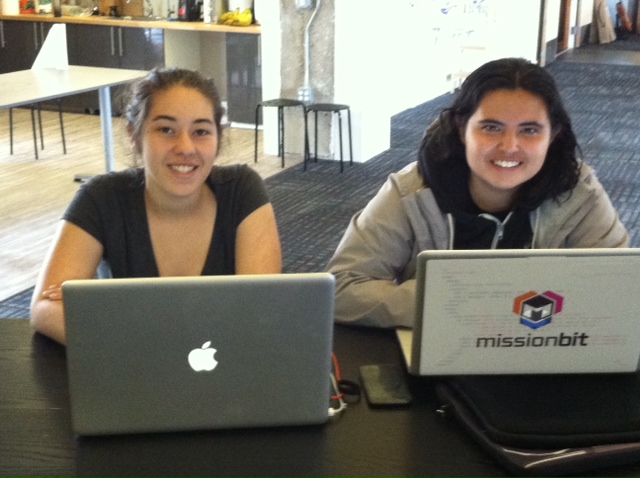
Mission Bit, a non-profit that teaches programming skills to middle and high schoolers in San Francisco, is teaming up with Hack Reactor for an exciting new partnership. As of June 2, three Mission Bit students are interning at Hack Reactor for one month, sitting in on lectures and working on coding projects.


Mission Bit interns Gisela (left) and Dulce during their first day at Hack Reactor
Started by Hack Reactor grad Tyson Daugherty, Mission Bit is a nonprofit that offers coding classes to middle and high schoolers in public school. They taught 68 students in four classes this Spring, and will expand up to ten classes in the Fall.

“The most important part of Mission Bit is that it offers free coding classes to kids who might not have it at their high school,” says Isaac, one of the three Mission Bit students interning at Hack Reactor. Though Isaac’s school offers Computer Science classes, he notes that Mission Bit “goes further than what we have at our school.”

That Isaac's school offers Computer Science courses makes him lucky among San Francisco students.

"At the end of the Spring 2014 semester, only 5 of the 17 public high schools in San Francisco offered any type of CS class within the bell schedule," says Daugherty. "For middle schools, I am only aware of two schools in San Francisco offering CS classes. If this were the late 1990's, this reality might be understandable, but today it is unacceptable, or at least should be."

Much like Hack Reactor offers an education not readily available in most college Computer Science programs, Mission Bit provides a course not easily found in middle and high schools.

Isaac, and his two co-interns, Gisela and Dulce, will work on real projects, such as creating a Health Initiative Leader Board or Social Media Conglomerator. They were selected for their combination of coding skill, motivation and ability to quickly grasp new material. All three have a natural affinity for coding.

“I like puzzles,” says Dulce. “I’m into Rubik’s cubes, and that kind of thing. I find coding is another puzzle.”

“Coding is not busy work,” Gisela explains. “It’s a lot of thinking. It takes problem solving skills.”

“You can imagine something in your head and then put it in front of you,” Isaac adds.

Daugherty came up with the idea for Mission Bit while he was a student at Hack Reactor, and the culture and approach of Hack Reactor is reflected in Mission Bit:

"Hack Reactor created an environment for me to transform myself," Daugherty explains. "This is fundamentally different than the idea that Hack Reactor transformed me. Mission Bit's approach to creating a learning environment founded on practical skill development yet designed to responsively catalyze personalized student learning is highly influenced by my experience at Hack Reactor and starkly contrasted to the more linear prescriptive teaching methodology our students experience in the public schools."

Now the influence and support Daugherty received from Hack Reactor has come full circle, with the launch of the internship program.

In addition to instruction and project work, the interns will receive mentoring from Hack Reactor staff on equally important “soft skills,” such as accountability, autonomy and professional skills.

For all three, the internship is well-timed. Gisela will start her senior year of high school in the fall. The internship is sure to a big plus on the coming slew of college applications. Isaac will start at UC Santa Cruz this fall with plans to major in Computer Science, and Dulce is off to a CS major at Sonoma.

“I hope to be a game developer or go into security,” Dulce notes.

This partnership will extend the goal of both Hack Reactor and Mission Bit of providing personalized, high quality, education that can be used immediately in the real world to students who might otherwise be hard-pressed to find it.

“I’m super excited to be at Hack Reactor,” says Isaac. “I’m ready to learn as much as I can.”

Thursday, May 15, 2014

For Entry-level Tech Jobs, Hiring Managers Care About Passion for IT More Than a Diploma


CIO

College graduates don't need to be employed to become involved with the tech industryBy Fred O'Connor
Wed, May 14, 2014

IDG News Service (Boston Bureau) — Class of 2014 college graduates looking for their first IT jobs take note: your passion for and experience with technology may prove more helpful in your employment search than your diplomas.

"I don't think in the past five-plus years I've hired someone based on their education," said Jim O'Neill, CIO of inbound marketing software company HubSpot in Cambridge, Massachusetts. "It's not a direct correlation to their success here."

A person's attitude and aptitude stand out more than where they went to school, O'Neill said. While academia hasn't kept pace with the rapidly changing technology industry, the entry barriers to learning hands-on, practical IT skills have been "eradicated," he said.

"With a credit card and 10 dollars you can buy a server at Amazon's cloud or Google's cloud or Rackspace's cloud," O'Neill said. "There's no excuse anymore. That's why I'm a little cynical on institutional education."

At Dice, which includes IT career website Dice.com, an Android app a recent graduate of Fresno State College in California created on his own -- not his education -- earned him a mobile product manager position.

"It's a great example of how someone who is graduating from Fresno State, not Stanford, can also work at a company like Dice because he was very proactive in building his own Android app," said Shravan Goli, president of Dice.

Job candidates should collect data that shows how IT projects they completed in their spare time solved a business problem or gained traction among users, said Markus Schwarz, senior vice president, Global SAP Education.

"What hiring managers are looking for is somebody who is able to consciously plan to approach a certain problem," he said. "They need to prove that they can connect the world they're familiar with -- technology -- with the worlds of business and the business user."

Some companies realize that new hires may lack some of a job's desired skills and are willing to train the right candidate.

"A very passionate, talented individual who wants to come in and get involved, you're going to find most employers are open-minded to taking a chance, especially if they prove to understand the industry and have a focus as far as what area they want to get into," said Ray Lowrey, CIO of McGraw-Hill Education.

Entry-level applicants shouldn't discount their participation in collegiate clubs, groups and sports teams. These activities appeal to employers since those experiences teach important soft skills like collaboration and being open to diversity.

"It's really important that they demonstrate the capabilities away from the keyboard, that they can really work in a team to determine customer requirements and translate that into technology," Schwarz said.

To gain resume-boosting IT skills -- and network for job leads -- new workers can participate in hackathons, contribute code to open-source projects, attend boot camps or get involved with user groups.

"Recruiters are also swarming meet-ups these days," Goli said. "These are great ways to make connections with your peers and connect with the people that are hiring."

"College students shouldn't feel intimidated about going," O'Neill said. "They should be running to because entrepreneurs are so excited to talk to young, fresh emerging talent."

Even the venerable internship is viewed as a recruiting tool.

"Given that companies have such a short supply of technology professionals, there are a lot of companies that are entertaining internships ever more so," Goli said.

For Schwarz, an internship doesn't only include working at a standard IT company. Performing database administration for a professor's research project is equally valuable work experience.

"They need to relate a proof point of their ability to absorb technological knowledge," he said.

User communities always welcome new participants and current members often tap them to find talent when their company is hiring, Lowery said. A

"Making yourself visible and getting involved doesn't require you to be employed," he said.

Graduates who are especially interested in learning about trendy technologies and making "themselves more valuable, even if it's at an entry level" should remember that emerging technologies evolved from primary languages like Java, A C++ and SQL, Goli said.

"Knowing those basic technologies and knowing how those technologies map to the latest technologies can also help them figure out which one they can get training around."

A graduate who knows Java, for example, and wants to become a Hadoop developer could learn the popular large data processing software by taking a course offered by Cloudera, a Hadoop vendor.

Of course, having an online presence can help a graduate get noticed since "the world is digital now," O'Neill said. Companies use social-media platforms, open-source code repositories and other public data sources to identify applicants and review their credentials.

"We do look at Github and actively look at people," O'Neill said. "We try to see what their online street credibility is. That's usually a huge indication of the quality and the passion of their craftsmanship."

Goli encourages graduates to "pick relevant places, participate, be active and be noticed. Your publicly available data becomes your publicly accessible technology profile."

Job seekers will find a strong market, Goli said, especially for positions involving large-scale data analysis, security and mobile development. Entry-level employment prospects are much better compared to the hiring environment during the recession.

As for when to start their job search, college students who begin after graduation aren't necessarily at a disadvantage, although some employers don't wait until closer to commencement time to begin recruiting entry-level workers.

"The job market probably isn't as cyclical as what it used to be," Lowrey said. "You have some startup operations that are going to occur whenever they occur."

Startups -- known for having flexible hours, lax dress codes and fast-paced environments -- offer an environment that is similar to college, Goli said. Companies that are preparing to issue an initial public offering or have just gone public are usually in high-growth mode and are looking to hire workers, he said. They may be flexible on the skill requirements since they're trying to increase productivity quickly.

And with a range of businesses investing in IT, "all companies are becoming tech employers," Goli said, so graduates should consider jobs outside of traditional IT employers.

Given the demand for talented technology workers, some companies make job offers for roles that don't start immediately. HubSpot recruits from hackathons and other less traditional technology events, which tend to be held in the fall or winter, O'Neill said. Skilled college students who attend those events may receive an offer for a position that starts the following spring or summer.

Recent graduates should have an "awareness of the different paths you can follow within technology, none of which will paint you into a corner," Lowery said.

O'Neill, whose company develops software that runs in the cloud, said the advent of SaaS has turned IT career development into choosing your own adventure.

"Companies are becoming more and more flexible in the light of the fact that managing servers is going away," he said.

For example, learning SaaS maintenance in a help-desk position could lead to an integration developer role combining different cloud services. A person could then start building products internally that combine workflows across SaaS platforms. Ultimately, a company may decide to sell some of those products, said O'Neill.

"The opportunities for IT folks -- particularly emerging IT folks -- A is how can you apply a product mindset to classically what was an administrative mindset. If you can bridge that gap, your career is endless because you can actually grow into a product engineer if you want to."

Fred O'Connor writes about IT careers and health IT for The IDG News Service. Follow Fred on Twitter at @fredjoconnor. Fred's e-mail address is fred_o'connor@idg.com

Tuesday, April 29, 2014

WSJ: Apprenticeships Help Close the Skills Gap. So Why Are They in Decline?

Wall Street Journal

Some States Try Extending the Practice to More Professions
By
LAUREN WEBER CONNECT
April 27, 2014 6:07 p.m. ET

It seems like a perfect solution: employers need qualified employees. Apprenticeships offer an opportunity for workers to get the exact skills they need. So why are apprenticeships in decline? Lauren Weber is here with the story. Photo: Getty Images.

Ask CEOs and corporate recruiters whether they're finding the workers they need, and they'll lament about a skills gap that threatens productivity and growth—not just in their companies but in the economy at large.

Yet employers and state legislators have been decidedly lukewarm about a proven solution to the problem: apprenticeships.

Apprenticeships can offer a precise match between the skills employers want and the training workers receive, says Robert Lerman, an economics professor at American University.

"It's a great model for transferring skills from one generation to the next," says John Ladd, director of the Department of Labor's Office of Apprenticeship.

Nevertheless, according to the Labor Department, formal programs that combine on-the-job learning with mentorships and classroom education fell 40% in the U.S. between 2003 and 2013.

All of which leads to the question: If apprenticeships are the solution to a pressing problem, why is there so much resistance?
Blue-Collar Image
Perhaps the biggest obstacle is that two-thirds of apprenticeship programs in the U.S. are in the construction industry, furthering a blue-collar image that stifles interest among young people and the employers who could create jobs for them. Construction unions, which dominate many of the state agencies devoted to apprenticeships, haven't done much outreach to other industries, Mr. Lerman says.

At the same time, business owners and managers sometimes shy away from apprenticeships because of their association with unions. "There's an underlying fear among employers" that unions want to come in and organize workers, or that any apprenticeship program would be run by a union, says J. Ronald DeJuliis, head of labor and industry at Maryland's Department of Labor.


Yet, he and others say, it doesn't have to be that way. Apprenticeships today involve lots more industries than the handful of trades that embraced the earn-and-learn model beginning in 1937 when the National Apprenticeship Act was passed. Nursing assistants, wastewater technicians and computer-system administrators are among the positions for which apprentices can now train.

Earlier this month, President Obama set aside $100 million to go toward apprenticeships in high-growth industries, and recognized new programs in health care, information technology and supply-chain management.

Another damper is a widely held view that young people should stay in school and then get a job. Advocates of apprenticeships say this thinking is misguided.

College degrees and internships don't produce the same quality of worker as intensive, on-the-job apprenticeships, says Brad Neese, director of Apprenticeship Carolina, a program of the South Carolina Technical College System. Employers are seeing "a real lack of applicability in terms of skill level" from college graduates, Mr. Neese says. "Interns do grunt work, generally." In contrast, he says, "an apprenticeship is a real job."

Some companies also fear that employees will leave for better-paying jobs almost as soon as they've learned their required skills. For them, an apprenticeship amounts to training workers for other companies.

But in many cases, employers are finding that apprenticeships actually help with retention, as workers who come up through apprenticeships see the investment their employers are making in their career and reciprocate with a greater sense of loyalty.

"The apprenticeship model helps us show people there's a career path within this company," says Robby Hill, owner of HillSouth, a Florence, S.C., technology consulting firm taking advantage of South Carolina's on-the-job training program. New employees see the opportunities ahead, along with a clearly delineated ladder of skill acquisition and salary increases, says Mr. Hill, whose 22-person firm offers apprenticeships for IT and administrative-support employees. The company also asks employees to sign noncompete agreements as they get accredited for new skills.
Innovative Thinking

Proponents of apprenticeships argue that blending on-the-job training, related education and benchmarks can be done in any occupation. They point to programs in places like South Carolina and Wisconsin as producing encouraging results.

Apprenticeships now exist for computer professionals and for certified nursing assistants in South Carolina, where the number of businesses offering apprenticeships has grown to 647 from 90 in 2007. Some 4,700 people who trained in South Carolina's apprentice program are now fully employed.


KEEPING TALENT | Robby Hill (center) says the training his tech consulting firm gives apprentices like Matthew Kirkland (right) helps them see there is a career path within this company.’ Mario deCarvalho

To get employers involved, the state offers a $1,000 annual tax credit for each apprentice on the payroll. "That helps open the door," says Mr. Neese. "For a small business, the credit can wipe out the education costs for an apprentice program.

"We've tried to make the tax credit as user-friendly as possible," he adds. "We have a very simple one-page form that literally says, 'How many apprentices do you have?' and then you multiple that number by $1,000."

Wisconsin, which has about 8,000 apprentices currently, is pushing to add training positions for skills from truck driving to high-tech manufacturing.

"We're projecting worker shortages in health care and advanced manufacturing," says Karen Morgan, director of Wisconsin's Bureau of Apprenticeship Standards. The Governor's Council on Workforce Investment is looking at what it can do, she says. The state has several programs to add robotics and high-level welding to its regular apprenticeship training.

"We're making our programs more nimble," Ms. Morgan says, to show manufacturers the relevance apprenticeships can have for a sector undergoing rapid innovation.

Ms. Weber is a staff reporter for The Wall Street Journal in New York. She can be reached at lauren.weber@wsj.com.

Corrections & Amplifications
The name of HillSouth was incorrectly given as Hill South in an earlier version of this article.

Thursday, April 17, 2014

A simple cure for the cybersecurity skills shortage

Opinion

An approach that has worked for centuries in all sorts of industries is just as applicable to the security field
By Ira Winkler  Computerworld
April 16, 2014 02:20 PM ET

Computerworld - There's a simple solution to the lack of skilled cybersecurity professionals. Which is not to say that it will be easy.

People constantly bemoan the dearth of skilled cybersecurity personnel, especially after a high-profile breach. And we hear a lot of proposals for fixing the problem: more certifications, more training, more research. All of these solutions amount to lobbying; they come from certification bodies, training companies and university researchers.

I don't deny that those proposed solutions are useful for improving some aspect of cybersecurity knowledge, skills and abilities. But taken all together, they won't give you a skilled practitioner. They won't even give you a competent practitioner. The best of these suggestions might be certification, but not all certifications are created equal. Certifications that require work experience are far superior to those that don't. Having extensive experience applying the knowledge embodied by the certification is the only way to demonstrate that you can provide expertise in securing an organization in practice.

Beyond certifications, though, experience is always the key in developing skilled security practitioners.

Many people would say that the National Security Agency, where I used to work, is the world's leader in cybersecurity, and has been for four decades. Given that reputation, it's interesting to think about how it came to occupy the pinnacle of cybersecurity competence.

The first thing that strikes me is that the NSA draws its staff from the same pool of personnel that's available to industry. Its potential employees don't have any unique knowledge, skills or abilities unavailable to private enterprises. What the NSA does is to hire people with appropriate backgrounds and skill sets and then build on those skills with on-the-job training and mentorship. It's that simple, but as I said, not necessarily easy.

This sort of thing is the normal practice in other industries. A new graduate with an architecture degree is not going to be hired to design a landmark building. Instead, he or she will work for years supporting a team of experienced architects, gradually taking on more responsibilities commensurate with his or her accumulating skills and experience. The same is true of engineers, and even of those in less prestigious professions, like plumbing. Why should we expect cybersecurity to be any different?

When I applied to the NSA, I had to take aptitude tests, which showed that I had high computer aptitude. I was offered a position in the Computer Systems Intern Program, where I had rotating job assignments in the computer field while attending various computer-related classes. Those classes were virtually the same as those taught at most colleges. My work assignments varied in responsibility, but that responsibility was always commensurate with my abilities. I was not looked to as an expert. Expertise takes time to develop and has little to do with the number of classes taken, certifications awarded or degrees attained.

My assignments involved programming, systems and network administration, cryptanalytic programming, database design and administration, white- and black-box software testing, and other functional roles. While none of those roles directly involved security per se, they all involved security when done properly.

The tactic that the NSA used was to add security skills, gained through experience, to competent individuals, rather than to take cybersecurity graduates and throw them into security matters with no experience. Even the highly accomplished NSA Tailored Access Operations unit was not staffed with people with degrees or certifications in cybersecurity, but with really smart IT professionals who understood the underlying technologies and were able to figure out how to exploit them.

When you look at the early experts in security, including those at the NSA, none was a formally trained security expert. They were either transplants from other areas of information technology, or they were considered to have exceptional ability and were mentored.

So when you look at the cybersecurity skills shortage, think about what is already working, at the NSA and in other industries: starting with capable people (even though their skill sets might be tangential) and having them apprentice under skilled people.

This approach takes time, effort and money. It's not easy. It is, however, what actually works.

Ira Winkler is president of Internet Security Advisors Group and author of the book Spies Among Us. He can be contacted through his Web site,irawinkler.com.

Tuesday, March 18, 2014

RHT: 4 Tips for a Positive Reference Check

by Clea Badion  Robert Half Technology
March 18, 2014


A little preparation can pave the way for a glowing reference check.

Like every part of the job search process — from the the IT interview to crafting your IT resume — preparation is key when it comes to the reference check.

Robert Half Technology’s senior executive director, John Reed, gives some advice onhow to ensure you get a fantastic reference check. His tips include making sure you have some diversity on your reference list, including former managers, people you managed, mentors and clients.

In addition, you should always let those on your reference list know you’re looking for a job, and ask if they’d like to serve as a reference before you add them to your list. No one should be surprised by a call from a perspective hiring manager.

Check out all the tips for a positive reference check in the article below:

The reference check portion of the job search process can mean the difference between getting a stellar job offer or a polite rejection email. A glowing and detailed review from an outstanding reference is a critical step to landing your dream tech job. You’ll be more likely to pass a potential employer’s reference check with flying colors if you follow these five steps:

1. Make a list. Write down the names of former managers who are likely to have positive things to say about your performance. You may want to add former coworkers, clients, educators, mentors, and even employees you managed to your list if you think a 360-degree reference portfolio would be valuable to the hiring manager. Many employers appreciate and will even request references from a variety of sources (and some will seek out these references on their own). This helps them gain a deeper understanding of how you interact with different team members and other key players, and helps to ensure they get the “straight scoop” on your skills and experience.

Hiring managers usually ask for three names when doing a reference check. You may want to have a list of five or six references handy however, just in case some people cannot be reached while the reference check process is under way.

2. Reach out. Contact the people on your list and let them know you’re looking for a new job. Ask each person for permission to include their name and contact information on your formal list of references. Be sure to ask how they prefer to be contacted — personal or office phone, private or work email. If they agree to serve as a reference, you may want to jog their memory about successful projects you contributed to and other achievements, especially if it’s been a while since you’ve worked together. You also may want to suggest which of your skills, experiences or qualifications you’d like them to highlight to hiring managers. After a job interview, and if you feel comfortable doing so, send your references a few key details about what was discussed; many hiring mangers use the reference check to confirm the information you have provided on your resume or during an interview.

3. Ask the right people. To land the job you want, a rave review from one or more reputable professional references is almost essential. It won’t help your case if a former boss can’t clearly recall you or your accomplishments. When contacting potential references, give them the option to bow out in case they don’t have fantastic things to say. A professional way to give them an out is to add: “I know you’re very busy, so if you don’t have enough time to do this, I understand.”

4. Follow up. Whether you get the job or not, be sure to thank your references for the time and effort they’ve expended on your behalf. An email is adequate, but a handwritten note is even better. It’s also a good idea to maintain contact with the people on your list. Keep them up to date on your career and send news of major work accomplishments. Staying in touch keeps you fresh in their minds, and helps them stay prepared to be references for you in the future.


— Clea Badion

Clea Badion is an editor for the RHT Blog. She’s been writing about the workplace, career trends and technology for the past decade. Clea has 15 years of professional writing and editing experience and a master’s degree in visual studies. She’s a little obsessed with cute animal videos and the show ”American Ninja Warrior.” Follow her on Twitter @cleabadion.

Friday, January 31, 2014

RHT: 8 Things IT Recruiters Wish They Could Tell You


by Clea Badion
January 30, 2014 Robert Half Technology


If there were no filters, here’s what IT recruiters would say to candidates.

For many highly skilled IT professionals — systems administrator, web developer or software engineer, to name a few — it’s probably not news to you that you’re in demand. In fact, you may even be hearing on a regular basis from firms interested in hiring you.

But just because you hold many of the cards in the IT job market, doesn’t mean you can do no wrong when talking to recruiters or hiring managers. No matter what city or town you live in, the tech community tends to be a small one, and you always want an active professional network so you have options if a time comes when you want to make a move.

I talked to four different Robert Half Technology recruiters (who will remain nameless!) and asked them, “If there is one piece of advice you could anonymously share with candidates, what would it be?” Here are eight things they’d tell you:
  1. Have realistic salary expectations. “There are limits, even in a hot market, and you can price yourself out of a job,” said one recruiter. Experienced recruiters know their market and what cost they will bear. Do your own salary research, but also trust their expertise. And don’t forget to consider all aspects of a job offer: Will you get opportunities to learn at a company that you wouldn’t somewhere else, or does the firm offer great perks
  2. Give your current employer a chance. Before you approach a recruiter, be clear about what’s not working in your current job and see if you can change it. One recruiter I spoke to said, “A lot of candidates come to me and want a raise, but they haven’t had a conversation with their current company yet.” Most employers want a chance to fix an issue with a valued employee. If they don t fix it, then it might be time to look. 
  3. Pay attention to appearances. Don’t give a hiring manager an excuse not to hire you. “Sometimes candidates don’t present themselves as well as they could,” said a recruiter. “While it seems basic, make sure you take a shower and comb your hair before an interview.” He added that any strong scent – from smoking or perfume, for example – can work against you in an interview. And while you probably don’t need to wear a suit and tie if you’re applying for a regular programming job, if you’ll be interacting with C-level executives, you’ll need to dress appropriately. Let interviewers focus on your skills, not your personal appearance. 
  4. Be professional when you answer the phone. “It’s surprising how many candidates are abrupt, unprofessional or even rude when they answer the phone,” said a recruiter. You don’t know who will be calling you, whether it’s a recruiter or hiring manager, so always be polite and professional when you answer the phone. If you can’t talk right then, give the caller a better time to reach you. Also, be sure that your voicemail message is at least somewhat professional. 
  5. Don’t post your resume on every job board. When you’re searching for a job, be selective. In addition, pick a recruiter you like and stick with him or her. “If you’ve signed up with every recruiter in the area, it makes it less likely that I’ll want to work with you,” said a recruiter. That said, if you aren’t getting interviews or the chemistry isn’t right, don’t hesitate to find someone else. 
  6. Be transparent. If a recruiter is working hard to place you, but you’ve already received a job offer at another firm, tell the recruiter you’re working with. “We need to know where you are in the job search process so we’re not trying to place someone who is unavailable,” said a recruiter. Also key: Let recruiters know if you have a vacation coming up that might affect an interview time or start date for a job, so they can convey it to hiring managers. 
  7. Bring your “A” game. Hiring managers are seeking IT professionals who are truly interested in a job. Show enthusiasm in an interview, even if you’re shy or reserved by nature. Ask questions about the technology and company culture during an interview, for example. A recruiter I spoke to said, “Showing up for an interview doesn’t necessarily mean you want the job – you have to demonstrate your interest.” Check out these interview mistakes for more tips. 
  8. Don’t burn bridges. You never know when you’ll need a job: “People in tech talk, and if you’re dishonest or unprofessional with one hiring manger, other hiring managers will likely hear about it,” said a recruiter. 

Indeed. On that last note, always treat everyone you encounter in a job search with courtesy and professionalism. You never know when you’ll run into them again.

And, while your technical skills are essential, so are your interpersonal skills, and you’re demonstrating them at every stage of a job search. Leave your tips for the job hunt in the comments section.


— Clea Badion

Clea Badion is an editor for the RHT Blog. She’s been writing about the workplace, career trends and technology for the past decade. Clea has 15 years of professional writing and editing experience and a master’s degree in visual studies. She’s a little obsessed with cute animal videos and the show ”American Ninja Warrior.” Follow her on Twitter @cleabadion.

Saturday, December 21, 2013

DHS OPENS 100+ CYBER INTERNSHIPS TO COLLEGE STUDENTS

Nextgov


National Park Service

The Homeland Security Department has opened up more than 100 volunteer positions across the country to college students pursuing a degree in a cybersecurity-related field.

The 2014 Secretary’s Honors Program Cyber Student Volunteer Initiative will provide unpaid student volunteer assignments at DHS field offices in more than 60 locations across the country.

The program, created in April 2013 by former DHS Secretary Janet Napolitano, provided assignments at Immigrations and Customs Enforcement’s computer forensic labs in 36 cities nationwide. The 2014 program will expand to include new opportunities at the Secret Service, U.S. Coast Guard, the Transportation Security Administration, the Office of Intelligence and Analysis, the DHS Office of the Chief Information Officer and additional state and major urban area fusion centers and ICE labs.

“DHS is excited to continue the Secretary’s Honors Program Cyber Student Volunteer Initiative and expand it to additional DHS offices and locations while increasing our engagement with students in the important cybersecurity work DHS does every day,” said Rand Beers, acting DHS secretary, in a statement. “Providing these opportunities across the department is a vital step in our efforts to cultivate the next generation of cybersecurity leaders and to attract the best and brightest cyber talent who are looking to pursue a career in public service.”

The honors program was created in response to a report released in October 2012 by the Homeland Security Advisory Council’s Task Force on Cyber Skills. The task force recommended that DHS strengthen its outreach to students at community colleges and the veteran population.

The cyber honors program is available to college students pursuing a two-year or four-year degree in a cybersecurity-related field. Participants will perform a broad range of duties in support of DHS’ cyber mission, from cyber threat analysis to digital forensics to network diagnostics and incident response. Specific skills, training and certifications may be required for certain positions.

The application period for the cyber honors program will close on Jan. 3, with student volunteer positions beginning in April 2014.

For more information on the program, click here.


BRITTANY BALLENSTEDT

Brittany Ballenstedt writes Nextgov's Wired Workplace blog, which delves into the issues facing employees who work in the federal information technology sector. Before joining Nextgov, Brittany covered federal pay and benefits issues as a staff correspondent for Government Executive and served as an associate editor for National Journal's Technology Daily. She holds a bachelor's degree in journalism from Mansfield University and originally hails from Pennsylvania. She currently lives near Travis Air Force Base, Calif., where her husband is stationed.

Tuesday, December 3, 2013

CA Career Briefs: Find an Internship

CA Career Briefs


“Nothing ever becomes real 'til it is experienced.”

              - John Keats, Poet

Find an Internship

Did you know?

In the NACE Job Outlook Survey 2013 employers continue to express a strong preference for job candidates who had completed at least one internship. Because employers have fewer hiring opportunities and a larger pool of candidates, they often rely on internship evaluations to make hiring decisions. Internships benefit both students and employers. They help students transfer the skills they are learning in the classroom to the workplace, gain real-world experiences, make industry connections and perhaps even land a job. Internships allow employers to “try out” potential employees. Nudge students toward internship opportunities by showing them the power of planning for one.

Try this…
Ask them…

What is an internship?

Why are internships important to students?

What qualities do employers want in their interns?

View video.
Distribute Student Activity, review the directions and complete.
Have students explain their internship vision to another classmate.
List next steps on how students can turn their internship vision into reality.
Add an Experience!

Connect with local Professional Associations related to your discipline and identify internship opportunities to share with your students. Encourage students to visit CaCareerCafe.com and do the Internships lesson… they’ll find it in the Experience section.

Thursday, April 25, 2013

NCRIC Cyber Internship Program


Northern California Regional Intelligence Center
Cyber Internship Program


Northern California Regional Intelligence Center (“NCRIC”) Mission

The NCRIC’s mission is to coordinate the exchange of criminal intelligence, threats, and hazards and facilitate regional communication among Northern California Law Enforcement, First Responders, Government and Private Sector Partners.

Overview of Cyber Internship Program

The NCRIC Cyber Internship Program provides an opportunity for undergraduate and graduate students interested in cyber threat intelligence and cyber security to work with Federal, State, local, and tribal government and law enforcement in support of the NCRIC mission.

Chosen cyber interns will learn about the intelligence and law enforcement fields through both formal and on‐the‐job training, and will be responding to real world threats, hazards, and situations.

Cyber interns will work with cyber threat intelligence analysts, the NCRIC information technology team, and all levels of law enforcement to produce cyber products and applications for NCRIC partners – including cyber threat and vulnerability assessments, novel mobile and web‐based applications, malware analysis studies, and cyber threat trend reports. NCRIC law enforcement partners include local Police Departments, FBI, DHS, DoD, DEA, ATF, U.S. Marshals, Secret Service, and more.

Examples of potential projects cyber interns will work on include producing analytical products on malicious cyber actors, development of honeypot systems, drafting malware analysis reports, writing code to automatically input data from relevant sources into GIS databases for use during live‐events, creating mobile applications to warn NCRIC partners about threats in the field, developing NCRIC‐specific RSS feeds, and drafting trend reports on prevalent malware in the NCRIC Area of Responsibility (“AOR”).

Application Process

Participating colleges and universities are asked to submit up to six applicants for each semester or summer session. Students within the Computer Science, Information Technology, Geographic Information Systems, and Computer Engineering majors are especially encouraged to apply.

Applicants for the Cyber Internship Program must submit a resume, a letter of recommendation, a copy of his/her college transcript to date with current GPA, a writing or project sample, and a short summary discussing why he/she wishes to intern for the NCRIC.

These items must be sent via email to CyberInternship@ncric.org. Please scan and email the transcript copy, or fax it to the attention of “NCRIC Cyber Internship Program” at 415.553.7411.

The short summary must not exceed 500 words. The writing or project sample can include college‐course submissions or especially impressive non‐academic projects (e.g. a website, an example of a web‐based or mobile application, etc.). Selections are based upon academic achievements, professional projects and accomplishments, area of study, life/work experiences, and the needs of the NCRIC.

The applicants’ résumés will be examined, and within two weeks a telephonic “first stage” interview will be conducted by the NCRIC Cyber Unit. After passing through the first stage telephonic interview, the potential candidate will be scheduled for an on‐site panel interview with the NCRIC management staff. After these interviews a maximum of four applicants will be selected for the duration of the semester or summer. The initial offer is conditional pending successful completion of a background investigation.

Chosen applicants who are part‐time interns will be required to work a minimum of 180 hours at the NCRIC or an average of twelve hours per week. Full‐time interns will be required to work thirty to forty hours per week and as the need arises if there is a crisis or disaster.

Background Investigation

Selected interns will have to undergo an extensive background investigation conducted by the San Mateo County Sheriff’s Office. The initial offer is conditional pending successful completion of the background investigation.

Non‐Disclosure Agreement (“NDA”)

All cyber interns will also be required to sign an NDA, which will clearly state that all programs, systems, products, and other intellectual property developed or affected by the intern will be and remain the property of the NCRIC. Further, the unauthorized disclosure of information to which the interns have access, or may obtain access, will be considered a breach of the NDA and may result in the termination of their relationship with the NCRIC and prosecution to the full extent of the applicable laws.

Position Details and Requirements


Internships with the NCRIC are uncompensated positions. The employer and the intern understand that the intern is not entitled to wages for the time spent in the internship. No interns will displace regular employees, and chosen interns are not necessarily entitled to a job at the conclusion of the internship.

All work done by the cyber interns will be done under the close supervision of existing staff. This work may include, inter alia, producing and handling sensitive information, responding to real threats to the NCRIC AOR, assessing and addressing NCRIC Partner vulnerabilities, and representing the NCRIC as a whole. As such, all cyber interns are expected to conduct themselves in the respectful and professional manner appropriate to the position of the internship. Any actions or conduct by the intern considered unbecoming of any employee, contractor, or other representative of the NCRIC will not be tolerated and will result in termination of intern status.

The NCRIC shall provide an educational work environment free of verbal, written, or physical conduct thathas the purpose or effect of unreasonably interfering with the intern’s performance or that may create an intimidating, hostile, or offensive environment. The NCRIC shall abide by all applicable laws and regulations.

The internship is designed to be a well‐supervised educational experience. The NCRIC will provide the training, tools, equipment and access to communication necessary to effectively and efficiently complete the tasks required. Failure to complete the mandatory work hours or poor performance will result in notification of the college or university to which the intern is associated and cancellation of intern status with NCRIC.

Monday, April 8, 2013

CA Career Briefs: Get Hired

Did you know?

While a strengthening economy is boosting  job growth, plenty of headwinds remain. Consequently, students need to make an extra effort to stand out in the hiring process. At CACareerCafe.Com students will find a variety of lessons to give them an added advantage. From visiting the campus career center to analyzing the corporate culture, this online lesson series provides tips and suggestions to move students ahead of the crowd. Show your students how they can use their voice to land a job with, Interview with a Ring. It’s sure to set the tone for success.

Brief them…

  • Pose some questions about the hiring process.
  • Explore the Café’s Home Page and the options it offers to help.
  • Go to Get Hired, review the lesson list and choose Interview with a Ring.
  • View video and the hyperlinks to additional information.
  • Distribute the Student Activity, review directions and complete.
  • Review the Cafe Folder page and have students circle lessons to try.

Want More?

To complement and support this lesson, try “Tech Talk Basics” in the Workplace Skills Library at CACareerBriefs.Com.


Within 7-12 seconds of hearing us speak, people form lasting impressions.
- Susan Berkley, Voice Coach

Saturday, March 16, 2013

Internships become the new job requirement

by Amy Scott
Marketplace Morning Report for Monday, March 4, 2013


By the time most kids are in high school, they’ve probably heard some career advice along these lines: get into a good college, pick a marketable major, keep those grades up, and you'll land a good job. But that doesn't quite cover it anymore.

In a survey out today from Marketplace and The Chronicle of Higher Education, employers said what matters most to them actually happens outside the classroom.

“Internships came back as the most important thing that employers look for when evaluating a recent college graduate,” says Dan Berrett, senior reporter at the Chronicle. “More important than where they went to college, the major they pursued, and even their grade point average.”

Colleges have been listening. This year the State University of New York, or SUNY, system is piloting cooperative education on nine of its campuses. In co-ops, students work in paid jobs with faculty supervision and earn credit toward their degrees.

“Our goal is that all 465,000 students who enroll annually at SUNY have some sort of experiential education experience,” says SUNY chancellor Nancy Zimpher.

Kristin Hayes is one of the first students at Stony Brook University, on Long Island, to do a co-op. She’ll work part-time helping care for disabled adults at a group home run by the non-profit YAI Network. Hayes is a biology major and plans to apply to graduate school to become a physician’s assistant.

“To be a competitive applicant, you really need to have a variety of experience,” she says. “I really wanted to get more experience in the field.”

David Carter wishes he’d followed his professors’ advice to do an internship in college. He graduated two years ago from the University of Massachusetts Lowell, where he studied mechanical engineering. In spite of good grades and a practical major, Carter hasn’t been able to find work.

“If I had done an internship, then I wouldn’t have been sitting on my thumbs the last two years, trying to find a job,” he says.

The numbers back him up. In a recent student survey, the National Association of Colleges and Employers found that 63 percent of paid interns in the class of 2012 had at least one job offer when they graduated. Of those who did no internship, only about 40 percent had an offer.

Thursday, September 13, 2012

Paid Summer Internships Work for IT Academy Students!


Posted by  on September 12, 2012 in Techwire

Over this past summer, 25 students from the Information Technology Academies (ITA) of West Contra County Unified School District (WCCUSD) enjoyed paid internships with a number of Bay-area employers. Students who participated in the paid work-based learning had wonderful experiences and now better understand how technologies are used to support organizational objectives.
The internships were arranged with the support of TechFutures, a non-profit organization started through the vision, inspiration and commitment of Mr. and Mrs. Ron Whittier to give underserved students an opportunity to have career-focused courses in the subjects of Database, Web Design and Networking.
Originally started as an after school program where the students came for 2 hours after school for 2 years where each class was a semester long, the West Contra Costa Unified School District later expanded TechFutures into the Information Technology Academy (ITA) program in order to reach more students through a small learning academy environment. The ITA program currently operates at El Cerrito, Kennedy and De Anza High Schools.
Many of the internship opportunities were researched by Chris Merrida, Office Manager of TechFutures, as well as by members of the TechFutures advisory board and contacts made by the teachers. The positions were announced, posted and discussed in classes last spring. ITA students submitted cover letters and resumes and interviewed for positions. The feedback from all the sites has been very positive and we are proud of all the students, many of whom are seniors this year. Several of the interns have been asked to stay on at their positions after the summer.
Ben Crosby, Internal Coach with the District’s College and Career Readiness Collaborative, commented that the “amazing” reflections from the ITA students about their internship experience validate the importance of work-based learning. Mr. Crosby said: “These students will remember these experiences forever and I know they can see the relevance of what they are learning in the ITA.”
Here are some of the student’s reflections on their summer work experiences:
NetXperts
The ITA Academy (and TechFutures) gave me an incredible opportunity to demonstrate my knowledge in computer networking, by locating me an internship at NetXperts, Inc. During my stay at NetXperts I shadowed engineers, not only to learn from them, but also got the chance to assist them in projects. I was actually doing a job that people were getting paid fifty dollars an hour to do. It was definitely an experience I will never forget.
NetXperts
This summer we helped all the employees with any work they needed help with from filing and paper work to making deliverables for their projects. Last week, I had the opportunity to help out on the Napa State Hospital Project. I am not sure if you have heard of the project. It’s been all over the news. NetXperts installed their new security system, so what I had to do was go around calibrating every building. Then that would be used to locate the staff whenever they called for help by using their new security system. That way, the cops would know whenever they are getting attacked by the patients and exactly where they are.
TSG Networks
Over the summer I was able to get an internship at TSG Networks. At TSG Networks I was able to learn how to run and operate a small business. It was a very cool experience. Everyone there was very nice and kind. They made me feel like I have be working there most of my life and not like I was someone new. On my first day there they bought me lunch and on another day gave me three field level seats to an A`s game. On my last day there they offered me a part time job that I go to now every day after school. I thank the IT academy at my school because if it was not for them I would never had gotten the internship that gave me my job.
Lawerence Berkeley Labs 
For LBL, my responsibilities are to work on multiple projects (there are eight so far) that relate to the web. I am currently working with a former ITA graduate, so I will use “we”, since our work is shared now.
We use a CMS (Content Management System) a 2-3 LBL coders made to work on department and division pages. Everything is “cleaned” through a method of Clean HTML.
I am currently working on an existing site for Multiscale (a project that calculates future climate changes using past records) to make it more dynamic using HTML, CSS, Javascript, PHP, SQL and sometimes Python. I am also working on a totally new site that will use a different structure, since the previous site had a lot of bad code. My colleague worked fully on a brochure for the Multiscale website.

BART

During the summer I worked at BART’s Enterprise Geographic Information System (EGIS) Department. I worked on their mapping system, creating and building footprints which BART uses to gather statistics on who rides and lives near BART. I also worked on road footprints, which would make the map easier for BART police to control crime that goes on around BART. Overall, this was an experience I will never forget, I learned so much and gained a lot from participating in this internship.
BART
At BART, I worked with EGIS (Enterprise Geographic Informational Systems), a very complex but mind-enriching computer program in which there was a map of the whole Bay Area. My job was to fix any errors around the BART tracks, which the BART police would use to easier navigate around the system. Plus, the free BART for summer didn’t hurt either.
BART
I interned at BART over the summer! In my internship I learned how to work with people in an office and outside setting. I also learned about how the community really effects BART’s decisions on producing more cars to hold more commuters, where to put more stations, and even things like naming those same stations. Out of the office, I would help out in BART’s summer youth tours, which showed kids around the Bay Area the different places they could go to by using the system. I loved working at BART. Everyone was really kind and funny and they made me feel at home. The internship was a fantastic experience.
City of El Cerrito
Over the summer, I was an intern at the El Cerrito City Hall. It was an engaging experience which educated me on many aspects of how things work in a government official building. I obtained many skills through interning with the city hall, such as learning database entry, filing, scanning, and setting up community events. Thank you TechFutures for giving me this great experience!
El Cerrito High Office
The internship I did was volunteering in the school’s main office. I helped the office by filing transcripts, shredding scrap paper, answering phones, helping people at the front office, cleaning the office, moving things, and helping the text book room. I thought the work was great because I had nothing to do in the summer and I needed something to do. It was not difficult and good way to spend the summer.
TechFutures
I worked at TechFutures as an intern for Desktop Support. I learned all sorts of things during this summer experience. I worked with my supervisor Robert Davis. He taught me how to reset BIOS, ghost a computer, set a student up for class, and many other computer systems skills.
worldOne 
During the summer I worked at worldOne Radio. I worked as a Web and Graphic Designer on the worldOne Radio site. I got the chance to work with WordPress, Dreamweaver and Photoshop. I added new pages and managed the site. I’m now creating a new keCg site from scratch which has helped my knowledge of HTML greatly. I got some experience in a freelance position which I have really enjoyed.
avatar

About Gary Page

Gary Page is an Information Technology Consultant the with the California Department of Education. He is also the publisher of Ed Synergy, a blog that exists to provide information and support to classroom teachers and administrators in California who teach primarily in subjects related to information technology and computer science.

Thursday, June 21, 2012

San Francisco Future Graduates: Summer Tech Internship Initiative Launches!


sf.citi.com is proud to stand with the San Francisco Police Foundation to kick off the Future Graduates Summer Tech Internship Program. Future Graduates enhances high school youth access to real-world job training placing students at innovative San Francisco-based tech companies in paid summer internships. Program encourages students to graduate high school, pursue fulfilling careers, and lead productive and healthy lives. sf.citi member companies participating: Pathbrite, Jawbone, Giggo, 6waves, Hipmunk, Sincerely, Zozi, Black Founders, Cloudera, Zoosk, blackgirlsCODE, Viumbe. In addition, sf.citi member Pathbrite will help students track their internship progress People Portfolios.
Highlighting the innumerable possibilities of success and learning that lie ahead, spearheaded by Chief of Police Greg Suhr, sf.citi has committed $25,000 to the Future Graduates program to fund these paid internships, and from our membership sf.citi has secured 20 internship pledges from 12 SF-based tech companies. The program launches today, Wednesday June 20 at 2pm at the Architectural Foundation of San Francisco.