Showing posts with label Hacking. Show all posts

Wednesday, July 22, 2015

BBC: Car hack uses digital-radio broadcasts to seize control


By Chris Vallance BBC Radio 4

BBC

Car infotainment systems can allow drivers to see vehicle status updates, play music and videos, view maps and in some cases run third-party apps
Several car infotainment systems are vulnerable to a hack attack that could potentially put lives at risk, a leading security company has said.
NCC Group said the exploit could be used to seize control of a vehicle's brakes and other critical systems.

The Manchester-based company told the BBC it had found a way to carry out the attacks by sending data via digital audio broadcasting (DAB) radio signals.

It coincides with news of a similar flaw discovered by two US researchers.

Chris Valasek and Charlie Miller showed Wired magazine that they could take control of a Jeep Cherokee car by sending data to its internet-connected entertainment and navigation system via a mobile-phone network.

Chrysler has released a patch to address the problem.

However, NCC's work - which has been restricted to its labs - points to a wider problem.

NCC Group was able to transmit the DAB signal using a laptop and a box made from easy-to-source parts
The UK's Society of Motor Manufacturers and Traders has responded by saying that car companies "invest billions of pounds to keep vehicles secure as possible".
Breached brakes
NCC demonstrated its technique to BBC Radio 4's PM programme at its offices in Cheltenham.

By using relatively cheap off-the-shelf components connected to a laptop, the company's research director, Andy Davis, created a DAB station.

Because infotainment systems processed DAB data to display text and pictures on car dashboard screens, he said, an attacker could send code that would let them take over the system.

Once an infotainment system had been compromised, he said, an attacker could use it as a way to control more critical systems, including steering and braking.

Depending on the power of the transmitter, he said, a DAB broadcast could allow attackers to affect many cars at once.

"As this is a broadcast medium, if you had a vulnerability within a certain infotainment system in a certain manufacturer's vehicle, by sending one stream of data, you could attack many cars simultaneously," he said.

"[An attacker] would probably choose a common radio station to broadcast over the top of to make sure they reached the maximum number of target vehicles."

Mr Davis declined to publicly identify which specific infotainment systems he had hacked, at this point.
Lab simulation
In many ways, modern cars are computer networks on wheels.

Mike Parris, of SBD, another company that specialises in vehicle security, said modern cars typically contained 50 interlinked computers running more than 50 million lines of code.

By contrast, he said, a modern airliner "has around 14 million lines of code".

The addition of automated car controls are creating new opportunities for hackers
Such technology allows the latest cars to carry out automatic manoeuvres. For example, a driver can make their vehicle parallel park at the touch of a button.

Mr Davis said he had simulated his DAB-based attack only on equipment in his company's buildings because it would be illegal and unsafe to do so in the outside world.

But he added that he had previously compromised a real vehicle's automatic-braking system - designed to prevent it crashing into the car in front - by modifying an infotainment system, and he believed this could be replicated via a DAB broadcast.

"If someone were able to compromise the infotainment system, because of the architecture of its vehicle network, they would in some cases be able to disable the automatic braking functionality," he said.
Jeep attack
On Tuesday, Wired magazine reported that two US security researchers had managed to remotely take control of a Jeep Cherokee's air-conditioning system, radio and windshield wipers while its journalist was driving the vehicle.

Wired magazine reported that a Jeep Cherokee had been hacked
Mr Valasek - director of vehicle security research at IOActive - said that NCC's attack appeared to have similarities with his own.

"I mean that's essentially what we did over the cell [mobile] network - we took over the infotainment system and from there reprogrammed certain pieces of the vehicle so we could send control commands," he said.

"So, it sounds entirely plausible."

But he added that such exploits were beyond the reach of most criminals.

"It takes a lot of time skill and money," he said.

"That isn't to say that there aren't large organisations interested in it."

More details about both the NCC and the US team's research will be presented to the Black Hat security convention in Las Vegas next month.


Monday, July 20, 2015

BBC: United hackers given million free flight miles


By Chris FoxxTechnology reporter

16 July 2015 BBC


US airline United has rewarded two hackers who spotted security holes in its website with a million free flight miles each.
The flight provider operates a "bug bounty" scheme that rewards hackers for privately disclosing security flaws rather than sharing them online.

It has given the maximum reward of a million flight miles, worth dozens of trips, to two people.

One security expert said the scheme was a big step forward for online security.

"Schemes like this reward hackers for finding and disclosing problems in the right way. That makes the internet safer for all of us," said security consultant Dr Jessica Barker.

"Bug bounties are common in tech companies as they tend to understand online security a bit more, but other industries are catching up," said Dr Barker.
Cash incentives
The idea of responsible disclosure, reporting issues and giving companies time to fix them, is not new.

Big technology companies such as Yahoo, Google and Facebook offer hackers cash incentives to report bugs privately.

In return for receiving their flight rewards, hackers are forbidden from revealing the nature of the security holes they discovered.

"We believe that this program will further bolster our security and allow us to continue to provide excellent service," United said on its website.

The company declined to comment further.

A million award miles could pay for dozens of internal flights in the US
"It's not always about hackers digging around looking for flaws. A hacker may be using a service and notice something a bit off," said Dr Barker.

"We all benefit if they look into that," she added.

Some critics of bug bounties say they can discourage companies from hiring professional security staff, because it's cheaper to offer hackers cash for disclosing bugs.

Dr Barker disagrees: "It should be part of an overall approach to security, but it's definitely a good approach.

"It encourages positive behaviour and shows young hackers that they can benefit from doing the right thing.

"Bounties can also benefit smaller companies who can't afford to give out cash rewards but can offer free products or services, so I hope we'll see more and more bug bounties," she said.

Monday, April 27, 2015

Cisco WASTC Conference, June 15-19 in Pomona


Do you feel like you work in a VACUUM?  

  
Do your Co-Workers think you are Strange?                                                                             


WASTC Academy Conference 2015

is not just about great Professional Development [of course we include that]-It is about getting to spend some time with people like you [and we are the best], so WASTC has scheduled time to do just that!

Breakfast & Lunch Every day
Appreciation Event, Thursday at 5:00 [food, band, industry representatives]
After Hours Networking Room to brush up on your technology or just hang out in the evenings getting some downtime with peers. 

  
Come join the fun -see flyer for the PD part.

Hope to see you there,

  
Karen
--
Karen Stanton
Cisco Networking Academy
ASC ITC Ohlone
WASTC Coordinator
Western Academy Support & Training Center-WASTC
www.wastc.org
661 362 5363
karen.stanton@wastc.org

MPICT

Friday, April 24, 2015

Potent, in-the-wild exploits imperil customers of 100,000 e-commerce sites

Actively exploited bug in Magento could compromise customer data on a massive scale.


by Dan Goodin - Apr 23, 2015 4:27pm PDT  Ars Technica


Enlarge
Scott Hough

Criminals are exploiting an extremely critical vulnerability found on almost 100,000 e-commerce websites in a wave of attacks that puts the personal information for millions of people at risk of theft.

The remote code-execution hole resides in the community and enterprise editions of Magento, the Internet's No. 1 content management system for e-commerce sites. Engineers from eBay, which owns the e-commerce platform, released a patch in February that closes the vulnerability, but as of earlier this week, more than 98,000 online merchants still hadn't installed it, according to researchers withByte, a Netherlands-based company that hosts Magento-using websites. Now, the consequences of that inaction are beginning to be felt, as attackers from Russia and China launch exploits that allow them to gain complete control over vulnerable sites.

"The vulnerability is actually comprised of a chain of several vulnerabilities that ultimately allow an unauthenticated attacker to execute PHP code on the Web server," Netanel Rubin, a malware and vulnerability researcher with security firm Checkpoint, wrote in a recent blog post. "The attacker bypasses all security mechanisms and gains control of the store and its complete database, allowing credit card theft or any other administrative access into the system."
Becoming your e-commerce admin

Attacks observed by Web security firms Incapsula and Sucuri are exploiting the bug to create new administrator accounts inside the Magento databases of vulnerable e-commerce sites. According to Sucuri, the exploits then go dormant, presumably so attackers can later access the databases to steal the personal information of customers.

"The code is leveraging SQL injection (SQLi) and inserting a new admin_user to the database," Sucuri CTO Daniel Cid wrote of one recent attacks in a blog post published Thursday. "If you suspect you have been compromised, look for the usernames vpwq or defaultmanager as it seems to be the ones being used by this specific group so far."

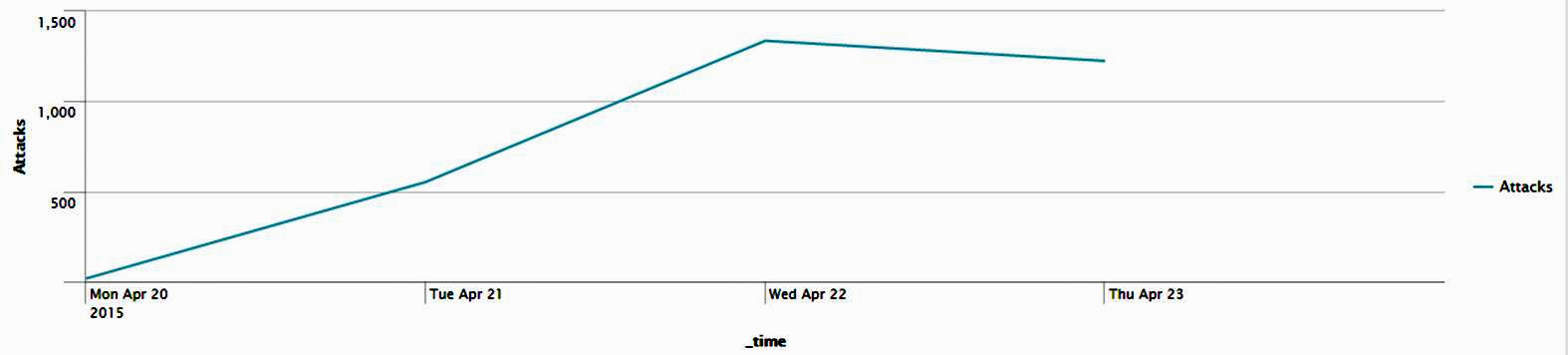
The attacks began on Monday, with fewer than 1,000 attempts against sites that are protected by Incapsula. They plateaued on Wednesday with a little under 1,500 attempts that day and continued into Thursday at about the same rate. On Wednesday, Checkpoint released detailed technical details about the vulnerability. Isreal-based Checkpoint first privately reported the vulnerability to eBay engineers in January. Checkpoint researchers have been encouraging e-commerce sites that use Magento to install the update ever since a patch became available in February.
Enlarge
Incapsula

The attacks are coming from the IP addresses 62.76.177.179 and 185.22.232.218, which are both based in Russia. Cid said web administrators who are concerned their sites are compromised should also check their logs for these addresses. Still, that method isn't fool-proof. According to Incapsula, attacks are also coming from addresses located in China, and it wouldn't be surprising for attacks to become more widespread in the coming days.

The vulnerability gives unauthorized attackers full control of a vulnerable website. That means they could dump the contents of databases to obtain customers' credit card data, e-mail and home addresses, phone numbers, and other personal information. Even when websites properly encrypt a database, attackers could still add hard-to-find scripts that behind the scenes pilfer sensitive customer data during the brief window it's being processed in an unencrypted format. Attackers could also exploit the Magento vulnerability to booby-trap vulnerable websites with malware infects the computers of visitors.

The vulnerability can also be exploited to change the prices a Web merchant charges for specific items. The following video, for example, shows Checkpoint researchers commandeering a laboratory server to obtain for free a luxury watch that normally sells for more than $100,000.
eBay Magento Remote Code Execution (RCE) Vulnerability Demonstration

Web application firewalls from Sucuri, Incapsula, or other leading security firms are blocking most if not all of the exploits underway, but sites that run Magento shouldn't consider such protection a substitute for installing February's patch. The update is available here, under the heading "SUPEE-5344". Installing the patch isn't as straightforward as many administrators would like, so Byte has providedinstallation instructions here. Byte's advisory also provides a search function that's designed to indicate if a specific online merchant is vulnerable. At time of writing, it indicated that Palo Alto Software, Linux Magazine of Germany, Sabaru.com.au, and Fullsail University, were among the 98,000 e-commerce sites vulnerable to the attacks. A variety of Amazon Web Services addresses are also included on the list, but they appeared to be test sites that aren't used in production. Alas, the site is of limited use to end users unless they know specific configuration details of the site they want to test.

Thursday, April 23, 2015

(ISC)2® Global Academic Program Summit and National Capture the Flag Competition


(ISC)2® Global Academic Program Summit and National Capture the Flag Competition

National Capture the Flag Competition
_______________________________________

In support of STEM outreach, MITRE and (ISC)² are hosting the annual national Capture the Flag (CTF) competition. High school and undergraduate college students will have the opportunity to compete in cybersecurity challenges to gain real-life experience and win national coverage to make a huge impact.

Who: High school and undergraduate college students
When: September 11–12, 2015
Where: Everywhere across the Internet!


Download the full brochure

To register or learn more, simply sign up and submit your resume here!

Registration now open through September 4, 2015

Questions?
Email the CTF Team


Global Academic Program Summit Webinar Learn how to become an (ISC)2 Global Academic Program Member
April 29, 2015
10:00 a.m. – 12:00 p.m. (EST)

Add to Calendar


Once you are approved by the host, you will receive a confirmation email with instructions for joining the session.

To view in other time zones or languages, please click here.

For more information on becoming a Global Academic Program Member visit www.isc2.org/academic or email academic@isc2.org.


Tuesday, April 14, 2015

Correction: ICT-Digital Media Sector Team Announces Certification Voucher Benefit for CCC Students and Faculty

[This corrected version includes some pricing changes and a different main contact] 

FOR IMMEDIATE RELEASE:

Thousand Oaks, CA│ April 8, 2015

ICT-Digital Media Sector Team Announces Certification Voucher Benefit for CCC Students and Faculty

As you know, the high cost of certification exams can be a barrier for some students pursuing careers in ICT. We are pleased to announce that the ICT-Digital Media Sector has partnered with Genuine Genius Technologies to create a solution. Now your college can provide students a way to save 15-50% on the cost of certification exams. Students simply purchase a voucher through the California Community Colleges XVoucher Website at a discounted price, then use that voucher number when registering for an exam.

There are benefits for faculty, too:
  • Each student voucher purchased helps qualify you for free CompTIA exams
  • No more searching for your member number; students purchase completely on their own
  • Gain insight on which exam vouchers are being purchased
  • Students contact the XVoucher technical support team with problems or questions
Vouchers are now available for the following exams at a significant cost savings:

Exam
Retail Price
Voucher Price*
Savings
CompTIA A+
$194
$99.53
50%
CompTIA Network+
$277
$153.21
45%
CompTIA Security+
$302
$213.60
30%
Microsoft MCP Academic Exams
$150
$92.82
40%
Microsoft MCP IT Academy
$150
$82.01
45%
EC-Council CEH Exam
$500
$414
20%
EC-Council Self Study
$600
$518
15%
*Quoted prices subject to change
There is no cost to participate. Just follow these steps:

1.      Complete the XVoucher Registration Form with your college information.

2.      If your college is not yet a member of the CompTIA CAPP Academy Program, complete the online form on the CompTIA website to join at no cost.

3.      If you are interested in the new EC-Council Academic Program, contact our vendor partner, Carrie Shaffer, at Genuine Genius Technologies. She can give you information about the program and assist you in joining.

Once your college is registered, students can purchase vouchers through the California Community Colleges XVoucher Website at any time. Just give them the link and they’ll be ready to order.
And this is just the beginning. As we work to add more vendors, such as Adobe and Cisco, we will continue to strengthen the position of the California Community Colleges as a resource for ICT continuing education. Sign up today to take advantage of these exclusive benefits and give your students more bang for their buck!

Contact:
Steve Linthicum
Deputy Sector Navigator ICT-Digital Media
(916) 300-7602


Monday, April 13, 2015

ICT-Digital Media Sector Team announces Certification Voucher benefit for CCC students and faculty.


FOR IMMEDIATE RELEASE:

Thousand Oaks, CA April 8, 2015

ICT-Digital Media Sector Team announces Certification Voucher benefit for CCC students and faculty.

Certification Exam Vouchers

As you know, the high cost of certification exams can be a barrier for some students pursuing careers in ICT. We are pleased to announce that the ICT-Digital Media Sector has partnered with Genuine Genius Technologies to create a solution. Now your college can provide students a way to save from 20-50% on the cost of certification exams. Students simply purchase a voucher through the California Community Colleges XVoucher Website at a discounted price, then use that voucher number when registering for an exam.

There are benefits for faculty, too:
  • Each student voucher purchased helps qualify you for free CompTIA exams
  • No more searching for your member number; students purchase completely on their own
  • Gain insight on which exam vouchers are being purchased
  • Students contact the XVoucher technical support team with problems or questions
Vouchers are now available for the following exams at a significant cost savings:

Exam
Retail Price
Voucher Price
Savings
CompTIA A+
$194
$99.53
50%
CompTIA Network+
$277
$153.21
45%
CompTIA Security+
$302
$209.98
30%
Microsoft MCP Exams
$150
$91.20
40%
EC-Council CEH Exam
$500
$411
20%

There is no cost to participate. Just follow these easy steps:

1.      Complete the XVoucher Registration Form with your college information.

2.      If your college is not yet a member of the CompTIA CAPP Academy Program, complete the online form on the CompTIA website to join at no cost.

3.      If you are interested in the new EC-Council Academic Program, contact our vendor partner, Carrie Shaffer, at Genuine Genius Technologies. She can give you information about the program and assist you in joining.

Once your college is registered, students can purchase vouchers through the California Community Colleges XVoucher Website at any time. Just give them the link and they’ll be ready to order.

And this is just the beginning. As we work to add more vendors, such as Adobe and Cisco, we will continue to strengthen the position of the California Community Colleges as a resource for ICT continuing education. Sign up today to take advantage of these exclusive benefits and give your students more bang for their buck!


Contact:
Steve Wright
Sector Navigator ICT-Digital Media
805 496 8583

Wednesday, April 8, 2015

As many as 1 million sites imperiled by dangerous bug in WordPress plugin

Persistent XSS in WP-Super-Cache allows attackers to insert malicious code.
by Dan Goodin - Apr 7, 2015 10:21am PDT
ArsTechnica


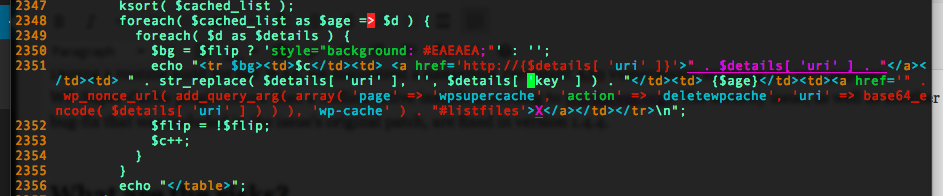
A screenshot showing the vulnerable portion of WP-Super-Cache.
Sucuri


As many as a million websites could be imperiled by a critical vulnerability recently discovered in WP-Super-Cache, a WordPress plugin that generates static HTML files from dynamic WordPress blogs.

The persistent cross-site scripting bug allows attackers to insert malicious code into WordPress-published pages that use the extension, according to a blog post published Tuesday by security firm Sucuri. Anyone who relies on the plug in should immediately upgrade to version 1.4.4, which has fixes for that bug and several others.

Sucuri researcher Marc-Alexandre Montpas wrote:

Using this vulnerability, an attacker using a carefully crafted query could insert malicious scripts to the plugin’s cached file listing page. As this page requires a valid nonce in order to be displayed, a successful exploitation would require the site’s administrator to have a look at that particular section, manually.

When executed, the injected scripts could be used to perform a lot of other things like adding a new administrator account to the site, injecting backdoors by using WordPress theme edition tools, etc.


The bug lies in the way WP-Super-Cache displays information stored in the cache file key. In vulnerable versions, user-supplied data was appended to the page contents without being scrubbed clean of any potentially malicious commands.

Wednesday, April 1, 2015

BBC: President Obama creates new cyber sanctions programme

BBC From the section US & Canada


US President Barack Obama has ordered the creation of a programme that would allow the government to sanction foreign hackers.

The US Treasury will now be able to target those attempting cyber attacks on US assets and infrastructure.

Mr Obama said cyber-threats are "one of the most serious economic and national security challenges" that the US faces.

The White House did not announce any new sanctions, only the authority to impose them when it deems necessary.

In January, the US imposed new sanctions on North Korea in response to a cyber-attack against Sony Pictures.

The new programme is the product of an executive order issued by the president on Wednesday.

The authorisation gives the US Treasury Secretary - in coordination with the Attorney General and Secretary of State - the ability to sanction "individuals or entities" that pose a cyber threat to the "national security, foreign policy, or economic health or financial stability of the United States," Mr Obama said in a statement issued by the White House.

A masked hacker, part of the Anonymous group, hacks the French presidential Elysee Palace website in 2012.
Mr Obama created the new authorisations because of the "unusual and extraordinary threat" from cyber-attacks that the US faces from beyond its borders, the White House said.

"Today's Executive Order allows us to expose and financially isolate those who hide in the shadows of the Internet to conduct malicious cyber activities," US Treasury Secretary Jacob Lew said.

Officials at the White House and the Treasury Department stress that the tool will not be used to target free speech on the internet or to curtail digital innovation.

They also say that this new authority will not replace traditional law enforcement responses to cyber threats. Instead, it is another tool for combating the threats when they originate from places with weak cyber security laws, or that have otherwise eluded traditional responses.

Mr Obama's Special Assistant and Cyber Security Coordinator Michael Daniel said the tool is "not one that we are expecting to use every day, in most cases our diplomatic and law enforcements tools will be the ones we turn to first."


US officials are particularly concerned with cyber threats originating from China and a select few other countries, that they say are capable of mounting large-scale cyber attacks. They fear that these attacks could shut down the electrical grid or other critical systems.

In recent years, several major US retailers have been victims of data breaches that compromised the financial data of customers.

In December, Sony Pictures was initially forced to pull its comedy The Interview from theatres after hackers released the personal data of its employees and embarrassing emails written by executives. The hackers also threatened violence at cinemas. Sony eventually decided to release the film in theatres and online.

The White House blamed North Korea for the attacks on the movie studio and later imposed sanctions on the reclusive country.

Thursday, March 26, 2015

CIO: Security best practices for users is your first line of defense

Credit: Thinkstock
Most savvy businesses are on top of their game when it comes to securing networks, encrypting sensitive data and keeping private customer information safe. But there's a glaring security vulnerability you may not have thought of: your end-users.
By Sharon Florentine
CIO | Mar 25, 2015 11:41 AM PT


Most CIOs are on top of their game when it comes to securing networks, encrypting sensitive data and keeping private customer information safe – chances are, you're one of those. But there's a glaring security flaw you may have overlooked: your end-users.

Preparing end-users to think securely
"Sure, you've invested in cutting-edge security software and you've got great IT talent – but you've also got end-users. Marketing, sales, administrative professionals; these are the folks who are woefully unprepared to deal with phishing scams, social engineering schemes and it's the cause of a lot of breaches. It's a major part of the problem," says Anthony Harris, a security expert and subject matter expert (SME) with online education provider Cybrary.

[Related: 9 biggest information security threats for the next two years ]

Users can be your weakest link, sure, but they can also be your greatest asset, says Dr. Guy Bunker, Senior Vice President, Products, security solution provider Clearswift.

"Users are both the greatest asset and the weakest link when it comes to security. Users ‘know’ what is really happening in terms of processes and policies that are followed and those that are ignored – they can be a great barometer for gauging the effectiveness of security measures," says Bunker.

"This is particularly true for processes which are not secure, or not as secure as they could be. However, users have to be educated. They need to understand that for instance, with many types of malware there is an application installed – and for that to happen there will be some further interaction requested. So, for example, if they click on a link and the system then asks to install some software – it could well be malware, and so they need to report the incident to IT or follow a well-defined process," Bunker says.
Education is critical
Educating end-users about their role in organizational security best practices is one of the most effective ways to beef up your security strategy, says Cybrary's Harris. He's currently developing the curriculum for a course on that topic that will cover everything from how to identify the most common threats to end-users to developing strong passwords to the risks associated with BYOD and how to prevent common security breaches, Harris says.

[ Related: 8 steps successful security leaders follow to drive improvement ]

"Mainly we're focusing the class framework on the persistent daily threats that end-users face and how to deal with them, as well as incorporating hands-on learning. We want end-users to know what a phishing e-mail looks like, for instance, and how they can check out the legitimacy of these social engineering tactics. End-users should be actively engaged in an organization's security strategy, not just following commands from leadership when they don't understand the rationale behind those best practices," Harris says.
Security communication is a two-way street
That's why effective security education must be a two-way street, says Clearswift's Bunker. Regular communication is needed and information must be shared – especially around targeted attacks, Bunker says. These communications around security don't have to be a big production – in fact, making security conversations part of everyday business can help end-users understand that security is something everyone should be concerned about, he says.

"You can send regular email bulletins or newsletters as well as offering more formal computer-based or instructor-led education and courses. You also should make the advice personal and applicable to their home life, as well, so the information's more likely to stick," Bunker says. Offering examples from published media reports, particularly successful phishing attacks and examples of infected documents, like those often sent to finance departments as a legitimate looking invoice, to help employees recognize potential attacks, he says.
Back up education with solid strategy
Education and training must be backed up by a solid strategy and process for dealing with threats as they are identified or attacks if they occur, says Mike Ricotta, head of New York Development for security solutions provider Blue Fountain Media.

[Related: The data breach quiz: What have we learned? ]

"A proper security strategy is the best way to get started but enforcing and maintaining best practices is ultimately a responsibility of your operations folks," Ricotta says. "Often, your organization’s vulnerabilities won’t require a great deal of talent to maintain, sometimes just caring enough to make sure you’re up to date with latest software upgrades and best practices is the best way to prevent intrusion. With social engineering remaining a leading cause of intrusion, limiting the 'human error factor' can be achieved with internal process, procedures and permissions," he says.
Technology is the last line of defense
Of course, all the education in the world isn't a foolproof solution, says Clearswift's Bunker. There are going to be times when your end-users click on a link they shouldn't, or install malware or activate a virus. It happens; have a plan in place to quickly report, identify and eliminate the problem to ensure your data and information are safe, he says.

"Make sure your end-users know who to call and how to report breaches when they happen – because even with your best efforts, they'll happen. The process doesn’t have to be big or complex – it should be a little like a fire drill, something people know about and do almost automatically because they have been educated often," Bunker says.

Finally, education and process need to be backed up with technology; people may be the first line of defense, but technology is the last, Bunker says. Advanced antivirus, antispam and adaptive data loss prevention solutions should be employed to watch for critical information loss across all channels, email, Web and even through the endpoint.

"It is a combination of education, process and technology based solutions which help organizations minimize their information security risk. Forewarned is forearmed," Bunker says.


Sharon Florentine — Staff Writer, CIO.com

Sharon Florentine covers IT careers and data center topics for CIO.com. Follow Sharon on Twitter @MyShar0na. Email her at sflorentine@cio.com.

Friday, March 13, 2015

Cisco Western Academy Conference: Call for Presentation Proposals

WASTC Cisco West Coast
Academy Conference 2015
June 18 & 19
Call for Presentation Proposals!

Hello Greatly Talented People!

It is time to submit your presentation proposals for the Academy Conference 2015!  Collaboration is the name of the game, and we all need to hear about what you do well.  Don’t be modest—you have lots of tools in your bag and we would love to [some of us need to] hear about one or two of them.

You will have 75 minutes for a presentation on either June 18th or 19th at Cal Poly Pomona.  
  • Technical
  • Educational Pathways
  • Jobs
  • Industry
  • Student Competitions
  • To infinity and beyond…

Also if you would like to hear a presentation on a specific topic, please send that request and we will try to make it happen.

To submit your proposals please send me:
1.    Your Name
2.   Title
3.   Short presentation description
  
Come show us what you got!
  
General Conference Information

Pre-Conference
June 15 – 17

Academy Conference
June 18 - 19
·      36 short sessions—full descriptions will be posted at a later time on the WASTC site
·      2 Key Notes
·      Appreciation Event (live band, food, and industry contacts)

Cost for one or both conferences
            $99 for WASTC Academies
            $150 for all others

To register and find more information, see the WASTC website: www.wastc.org

Best regards, Karen

--
Karen Stanton
Cisco Networking Academy
ASC ITC Ohlone
WASTC Coordinator
Western Academy Support & Training Center-WASTC
www.wastc.org
661 362 5363
karen.stanton@wastc.org

MPICT

Wednesday, March 11, 2015

BBC: Wikimedia Foundation sues NSA over surveillance

10 March 2015 Last updated at 07:53 ET BBC

The extent of NSA surveillance has been revealed by whistle-blower Edward Snowden
The NSA's mass surveillance programme violates US laws on freedom of speech, alleges a lawsuit begun by the Wikimedia Foundation.
The legal action has been filed against the spy agency and the US Department of Justice.

The legal action, co-signed by eight other organisations, seeks to end the NSA's large-scale surveillance efforts.

The Foundation is the non-profit group that oversees the running of the Wikipedia online encyclopedia.

The Wikmedia Foundation said it was taking action against the NSA's so-called "upstream" surveillance work which targets communication with people not in the US.

Such spying violates US laws on free speech and those that govern against unreasonable search and seizure, it said.

The scale of the monitoring carried out by the NSA has been revealed in documents made public by whistleblower Edward Snowden over the last two years. Some of those papers show the NSA tapped the net's backbone network to siphon off data. The backbone is made up of high-speed cables that link big ISPs and key transit points on the net.

"By tapping the backbone of the internet, the NSA is straining the backbone of democracy," said Lila Tretikov, executive director of the Wikimedia Foundation, in a blogpost announcing the legal action.

Targeting the backbone means the NSA casts a "vast net" and inevitably scoops up data unrelated to any target and will also include domestic communications, violating the rules governing what the NSA can spy on, said Ms Tretikov.

Information in the Snowden papers revealed that Wikipedia has been explicitly targeted, said the blogpost.

"By violating our users' privacy, the NSA is threatening the intellectual freedom that is central to people's ability to create and understand knowledge," said Ms Tretikov.

In an accompanying editorial published in the New York Times, Wikipedia founder Jimmy Wales said he hoped the lawsuit would bring an "end to the NSA's dragnet surveillance of Internet traffic".

Other organisations joining the lawsuit include Human Rights Watch, Amnesty International USA, the National Association of Criminal Defence Lawyers and the Global Fund for Women.

The NSA and DoJ have yet to comment on the legal action.

New smoking gun further ties NSA to omnipotent “Equation Group” hackers

What are the chances unrelated state-sponsored projects were both named "BACKSNARF"?
by Dan Goodin - Mar 11, 2015 6:01am PDT  Ars Technica


Niels Noordhoek

Researchers from Moscow-based Kaspersky Lab have uncovered more evidence tying the US National Security Agency to a nearly omnipotent group of hackers who operated undetected for at least 14 years.

FURTHER READING
HOW “OMNIPOTENT” HACKERS TIED TO NSA HID FOR 14 YEARS—AND WERE FOUND AT LAST

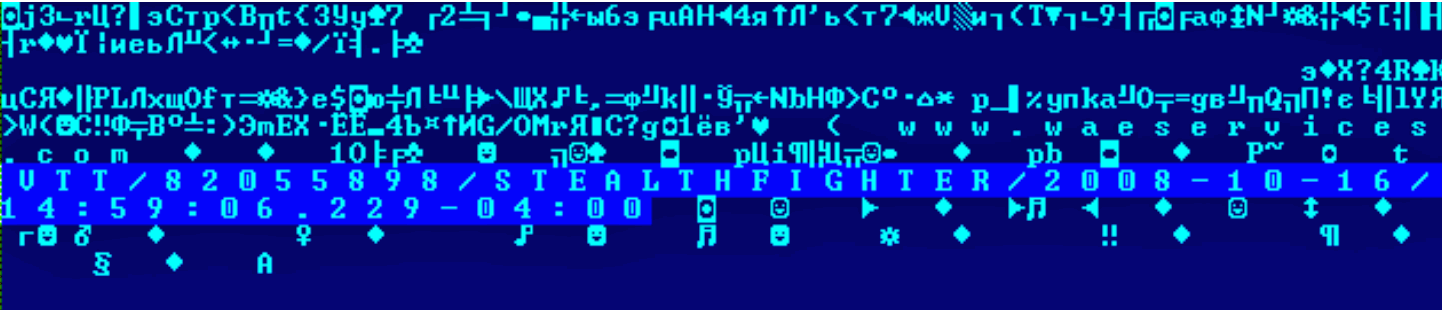
"Equation Group" ran the most advanced hacking operation ever uncovered.The Kaspersky researchers once again stopped short of saying the hacking collective they dubbed Equation Group was the handiwork of the NSA, saying only that the operation had to have been sponsored by a nation-state with nearly unlimited resources to dedicate to the project. Still, they heaped new findings on top of a mountain of existing evidence that already strongly implicated the spy agency. The strongest new tie to the NSA was the string "BACKSNARF_AB25" discovered only a few days ago embedded in a newly found sample of the Equation Group espionage platform dubbed "EquationDrug." "BACKSNARF," according to page 19 of this undated NSA presentation, was the name of a project tied to the NSA's Tailored Access Operations.


"BACKSNARF" joins a host of other programming "artifacts" that tied Equation Group malware to the NSA. They include "Grok," "STRAITACID," and "STRAITSHOOTER." Just as jewel thieves take pains to prevent their fingerprints from being found at their crime scenes, malware developers endeavor to scrub usernames, computer IDs, and other text clues from the code they produce. While the presence of the "BACKSNARF" artifact isn't conclusive proof it was part of the NSA project by that name, the chances that there were two unrelated projects with nation-state funding seems infinitesimally small.


Kaspersky Lab
The code word is included in a report Kaspersky published Wednesday detailing new technical details uncovered about Equation Group. Among other new data included in the report, the timestamps stored inside the Equation Group malware showed that members overwhelmingly worked Monday through Friday and almost never on Saturdays or Sundays. The hours in the timestamps appeared to show members working regular work days, an indication they were part of an organized software development team. Assuming they worked a regular 8 to 5 workday, the timestamps show the employees were likely in the UTC-3 or UTC-4 time zone, a finding that would be consistent with people working in the Eastern part of the US. The Kaspersky report discounted the possibility the timestamps were intentionally manipulated, since the years listed in various executable files appeared to match the availability of computer platforms the files ran on.

Previously found evidence suggesting a possible connection to the NSA included the Equation Group's aptitude for conducting interdictions that in 2009 placed highly advanced malware on a CD-ROM sent to a prestigious researcher who attended a scientific conference. That interdiction was similar to an NSA-sponsored one detailed in documents leaked by former NSA subcontractor Edward Snowden thatinstalled covert implant firmware on a Cisco Systems router as it was being shipped to its unwitting customer. Still other ties included zero-day vulnerabilities shared between Equation Group malware and the NSA-led Stuxnet worm that sabotaged Iranian uranium enrichment efforts in 2009 or so. The countries that were and were not targeted are also consistent with Equation Group being a US-sponsored project.

Most of the new details included in Tuesday's report will be of interest only to hard-core researchers. Still, they only bolster previous findings that Equation Group was hands down the world's most advanced hacking operation ever to come to light. Whereas before the sprawling Equation Drug platform was known to support 35 different modules, Kaspersky has recently unearthed evidence there are 115 separate plugins. The architecture resembles a mini operating system with kernel- and user-mode components alike. Readers can expect more revelations to come as researchers continue to analyze new samples and further examine the malware that has already come to light.

Facebook Infosec Virtual Meet and Greet, March 20th

Image result for facebook
Hey there,

Julian Nagler from Facebook's Information Security team here. Over the past year we've made a dedicated effort to support existing organizations making an impact in educating students on the skill sets needed to succeed in information security careers. 

We see first hand how the shortage of qualified talent in the infosec field is negatively impacting the industry, and the safety of the internet at large. We're committed to doing whatever is within our power to change this reality. 

In addition to the other work we do, we've found great value in speaking face to face with students across the country as we've supported and participated in various events. We'd like to broaden the scope of this engagement to reach as many students as possible. 

As a result, we're pleased to announce our first virtual meet and greet scheduled for next Friday, March 20th, 2015. We'd be honored to have your infosec club, or any other interested students join and participate. 

This will be a fantastic opportunity for students to ask any questions they may have about careers in information security, the ins and outs of various jobs within the field, or any other pressing questions they may have. 

This is by no means meant to be a recruiting event, rather we're focused on doing what we can to present the attractiveness of a career in information security.

Please have students RSVP to the event here, and submit any questions they’d like addressed to meetsecurity@fb.com. 

The event will be hosted via livestream here. 

Thank you so much for your assistance in distributing. 

-- 
Julian Nagler|facebook

1 Hacker Way| Menlo Park, 94025